

Intensifying clashes in Syria’s coastal provinces underscore the Alawite community’s rejection of the HTS-led interim government’s centralised approach, reminiscent of the former Assad regime.
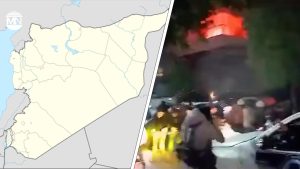
Since the ousting of Bashar al-Assad in December 2024, Syria has been undergoing a tumultuous transition. The interim government, dominated by Hay’at Tahrir al-Sham (HTS), has faced mounting opposition from various marginalised groups, including the Alawite community. Recent clashes in the coastal regions have brought this dissent to the forefront, as Alawite forces, led by Brigadier General Ghyath Suleiman Dala, mount a fierce resistance against HTS control.
The Syrian Observatory for Human Rights reports that the ongoing confrontations, which erupted last night and have now continued for over 14 hours, have resulted in at least 70 casualties. The battles are concentrated in Beit Ana, Tartus, the outskirts of Baniyas, Jableh, Qardaha, Latakia, Homs, and Masyaf. Notably, Qardaha—Bashar al-Assad’s hometown—remains outside state control, along with several villages and towns in the coastal mountains.
The Alawite insurgents have launched coordinated attacks, including ambushes on HTS posts and reinforcement convoys. Their operations have led to HTS losing control over large portions of the western countryside of Latakia, Tartus, and Baniyas. In a significant development, insurgent forces have seized at least one airfield in Latakia, with unconfirmed reports suggesting another has fallen in Tartus. Reinforcements have been deployed via the Homs-Tartus and Idlib-Latakia roads, indicating that further escalation is likely.
The root of the Alawite uprising lies in widespread dissatisfaction with the policies of the HTS-led interim government. Many in the Alawite community see the group’s approach as a continuation of the centralised governance that defined the Assad era, albeit under a different ideological banner. The interim rule of Ahmed al-Sharaa (Abu Mohammad al-Julani) has so far excluded communities such as the Alawites, Druze, and Kurds from national conferences and decision-making processes. The Druze have declared autonomy, while the Kurds continue to push for a decentralised, democratic Syria.
Related Articles :
Erdoğan hosts Syria’s interim president in high-profile receptionUS Senator Rubio warns against abandoning SDF, cautions Erdoğan on aggressionAnalysis: Erdoğan’s strategy to replace SDF with Turkish-Arab forces against ISIS
The HTS-led interim government has also been accused of targeting Alawite civilians and religious sites in past attacks. Reports indicate that Alawite temples have been attacked, and civilians killed in assaults by HTS-affiliated factions. These incidents have fuelled resentment and reinforced the perception that the current governing structure is hostile to non-Sunni communities.
Meanwhile, Turkey’s involvement in supporting the interim government has played a negative role, as Ankara has reportedly pushed for a centralised Arab-dominated state reminiscent of Assad’s rule, rather than fostering a truly democratic system. This position has deepened divisions and provoked further resistance from groups seeking regional autonomy.
Guerrilla tactics have played a crucial role in the insurgency, with hit-and-run attacks and ambushes proving effective against HTS forces. Despite attempts by the interim government to regain control, the resistance movement has maintained its momentum. Observers note that the growing discontent among traditionally marginalised communities signals a broader challenge to the authority of the HTS-led government and raises questions about the future stability of Syria’s coastal regions.
The Autonomous Administration of North and East Syria (AANES) has responded to the escalating violence, warning that the ongoing clashes in Latakia, Tartus, Idlib, Homs, and Daraa are pushing Syria further into catastrophe.
The AANES has criticised the Syrian government for exacerbating the conflict by ignoring the country’s diverse ethnic and sectarian makeup. Calling for an immediate end to the hostilities, the AANES has urged all factions to initiate a national dialogue to prevent further bloodshed and destruction.
As the situation unfolds, the international community is closely monitoring the developments. The Alawite uprising underscores the deepening fragmentation of power in post-Assad Syria and highlights the complex struggle for control in a nation still reeling from years of war and instability.


