

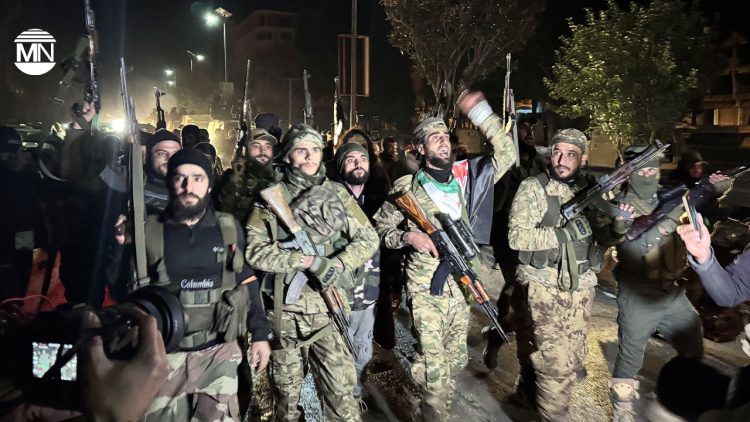
Gunmen believed to be linked to jihadist groups that seized power in Syria after the fall of President Bashar al-Assad in early December opened fire in the northern province of Hama on Friday, according to multiple sources. At least 10 civilians from the Alawite community were killed in what monitors and local officials described as a “massacre”.
The Britain-based Syrian Observatory for Human Rights (SOHR) reported that armed men with pistols fitted with silencers knocked on doors in the village of Arzah before opening fire on residents. “A child and an elderly woman were among those killed,” said Rami Abdel Rahman, the Observatory’s director. “They were Sunni Muslims targeting Alawites – this has all the hallmarks of a sectarian killing.”
Since taking control of significant parts of the country, various hardline Sunni militant groups have been accused of carrying out violent reprisals against Syria’s Alawite minority, which has long been associated with the Assad clan. Local authorities in Hama said the jihadists managed to flee before security forces arrived. “We are surrounding Arzah to arrest the perpetrators,” a security official in Hama told the Al-Watan newspaper, adding that “former officers and soldiers” were among the dead.
The incident has escalated the unease among Syria’s Alawite population. Despite statements by the new rulers promising civil peace, fears of reprisals persist. Several civil society organisations and religious groups warn that such attacks signal a worrying trend of targeted killings based on sectarian identity that threatens to undermine any prospects for national reconciliation.
In Istanbul, Tülay Hatimoğulları, co-chair of the Peoples’ Equality and Democracy (DEM) Party, recently condemned the attacks and highlighted the vulnerability of the Alawite community. “Syria’s Alawites are facing alarming violence,” she told participants in a panel entitled “Aleviler barışı konuşuyor” (Alevites Talking Peace). “We must step up our efforts to expose these massacres and stand in solidarity with Alawite families.”
Meanwhile, in Washington, Tulsi Gabbard, President Trump’s nominee for director of national intelligence, warned that al-Qaeda-linked groups remain a potent threat in Syria. “I have no love for Assad or Gaddafi or any dictator,” she told a Senate committee, “I just hate Al Qaeda. I hate that we have leaders who cozy up to Islamist extremists and minimize them as ‘so-called rebels.'”
Her comments echoed similar concerns expressed by regional analysts, many of whom point to the spread of extremist networks throughout the country. Although Syria’s new government denies harbouring ties to jihadist groups, observers say it has done little to curb violence against minority communities, particularly Alawites.
The massacre in Arzah follows a series of killings that have claimed scores of lives across Syria in recent weeks. The SOHR has documented at least 105 killings this year alone – acts it describes as retaliatory attacks that exacerbate sectarian divisions. “The media blackout and misrepresentation of facts work against civil peace and coexistence in Syria,” the Observatory warned in a recent statement.
As security forces continue to search for the perpetrators, families in al-Za’ar and beyond are burying their loved ones. The international community has called for increased humanitarian access and renewed dialogue between all parties to prevent further sectarian bloodshed. But with tensions simmering and repeated warnings of extremist infiltration, the immediate future for Syria’s vulnerable minorities remains uncertain.


