

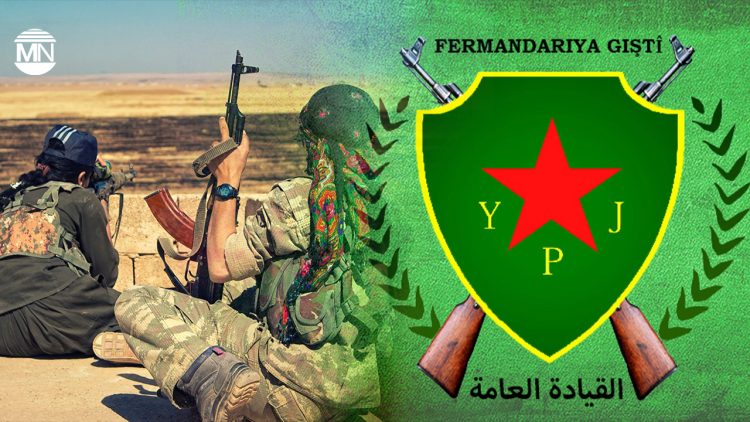
The Women’s Protection Units (YPJ) released a statement on Tuesday, declaring that the future of Syria must be shaped by women fighting for freedom rather than those responsible for violence and massacres. The Kurdish-led armed force, which has played a key role in the battle against the Islamic State (ISIS) in Syria, also condemned a recent conference in Damascus where former jihadist Ahmed al-Sharaa, better known as Abu Mohammad al-Jolani, declared himself Syria’s interim president.
The YPJ denounced the legitimacy of the gathering, calling it “highly suspicious” and criticising the involvement of figures linked to past atrocities. The group reaffirmed its commitment to the continued struggle against ISIS, warning of ongoing threats against women and society in Syria.
“The new Syria will be built by women who struggle for freedom,” the YPJ statement declared, emphasising the dangers women face in the region and the need for them to organise and play a decisive role in Syria’s future.
The YPJ, an all-female military force operating in North and East Syria, underlined its determination to defend not only Kurdish and Arab communities but also “humanity from the attacks and massacres that have taken place in numerous cities across Europe and, most recently, in the United States”. The unit was instrumental in defeating ISIS in Syria and continues to play a crucial role in maintaining security in areas under its control.
Referring to the recent political developments in Damascus, the YPJ rejected the legitimacy of the conference where al-Jolani was named interim president. “It is deeply concerning that the fate of an entire region is being determined solely by armed groups behind closed doors in Damascus,” the statement read. The YPJ also pointed out the participation of Hatim Abu Shaqra, the leader of the Ahrar al-Sharqiya group, which was responsible for the assassination of Future Syria Party leader Hevrin Khalaf in 2019.
Related articles:
Hevrin Khalaf’s killer solidifies power within HTS government

Hevrin Xelef: A Profile
“Some may attempt to refine their image with a suit and tie, but this does not mean we will overlook the truth about these murderers—those who have spilled the blood of thousands, committed massacres, beheaded people, and gone so far as to mutilate the bodies of women with utter brutality,” the YPJ stressed.
The statement highlighted that systematic violence against women has led to the collapse of society in Syria and that rebuilding a democratic nation requires women’s full participation. “A free and democratic Syria will rise at the hands of women fighting for freedom, not at the hands of those who murder them,” the YPJ concluded.
Çiğdem Doğu, a member of the Executive Council of the Kurdistan Women’s Communities (KJK), echoed the YPJ’s message during an interview on Medya Haber TV on Sunday. She stressed the importance of the women’s revolution in North and East Syria, also known as the Rojava revolution, in shaping Syria’s future.
“In one place, there’s a women’s revolution, in another part, there’s a different reality of government,” Doğu stated, explaining that North and East Syria’s political model includes women in all areas of life, from politics and education to security and the economy. “Mechanisms such as the co-presidency system and women’s councils have been developed,” she added.
Doğu emphasised that women’s movements must take on a greater role in shaping Syria’s political landscape. “A great responsibility lies on the shoulders of the women’s movements of North and East Syria at this time,” she said.
She called for further mobilisation, urging women to organise meetings, initiatives, and platforms to strengthen their role in the political process. “The future is in the hands of the women. They must fight with this mentality and also participate in the building process,” Doğu concluded.
The YPJ’s statement comes amid escalating violence in northern Syria, where Turkish forces and their allied militias have intensified attacks on key infrastructure, including the Tishreen (Tişrîn) Dam and Qara Quzak (Qere Qozaq) Bridge.
The YPJ, which played a central role in the territorial defeat of ISIS, warned that threats remain, both from remnants of the extremist group and from regional actors seeking to destabilise Kurdish-led autonomous areas. The women’s forces have positioned themselves as defenders of both gender equality and regional stability, arguing that their fight extends beyond military resistance to shaping Syria’s political future.
With increasing political shifts and military aggression, the YPJ and allied women’s movements remain steadfast in their belief that the foundation of a democratic Syria must be laid by those who have resisted oppression, rather than those responsible.


