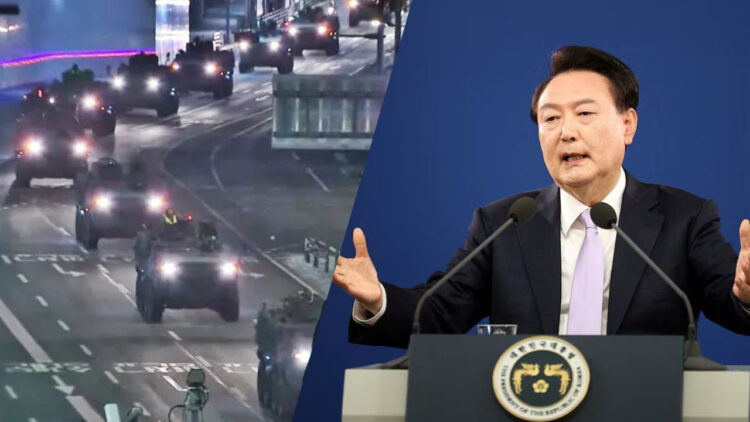
In a dramatic late-night address, South Korean President Yoon Suk Yeol declared martial law on Tuesday accusing opposition forces of endangering constitutional order. The unprecedented announcement marked the first imposition of martial law in the country since 1980 and triggered immediate political and economic ripples.
Yoon’s declaration, aired on national television without prior notice, alleged that “pro-North Korean anti-state forces” were sabotaging parliamentary processes and threatening the nation’s stability. The measure suspends political party activities, restricts media freedoms, and places the National Assembly under military control, according to Yonhap news agency. The president claimed the drastic step was necessary to protect the nation’s democratic framework and “eradicate despicable forces undermining freedom and happiness”.
The decision ignited fierce backlash across the political spectrum, with opposition leader Lee Jae-myung urging citizens to resist what he called “a return to military rule” during a livestream. Even Yoon’s conservative allies, including party leader Han Dong-hoon, condemned the move, vowing to challenge it alongside the people.
Economic markets reacted swiftly, with the South Korean won plunging against the US dollar. A central bank official signalled readiness to stabilise the market, as fears of broader instability mounted. Meanwhile, the White House and US military, with 28,500 troops stationed in South Korea, declined immediate comment.
Yoon’s announcement follows escalating tensions in parliament, where opposition lawmakers recently moved to impeach top prosecutors and slashed 4 trillion Won ($2.8 billion) from the government’s budget proposal. Critics argue the president is leveraging martial law to silence dissent amid domestic challenges rather than addressing external threats, such as North Korea.
The streets surrounding the National Assembly were sealed by military personnel, further heightening public anxiety. South Korea, once governed by authoritarian regimes, has been a robust democracy for over four decades, making this move a significant turning point in its modern history.