The Kurdish-led Autonomous Administration of North and East Syria (AANES) is set to escalate its political engagement with the Syrian government, with a new delegation travelling to Damascus on Friday 30 May to implement a landmark agreement signed on 10 March between Syrian Democratic Forces (SDF) General Commander Mazloum Abdi and Syria’s Interim President Ahmed al-Sharaa, also known as Julani, ANF reported on Wednesday.
The upcoming visit was confirmed by Abu Omar al-Idlibi, commander of the Democratic Northern Forces—a unit affiliated with the SDF—who described it as “a critical development that will strengthen the unity of the Syrian state and enhance national stability.” In a statement shared on social media, Idlibi said the delegation’s goal is to reinforce the March memorandum and push forward plans for constitutional reforms and military integration.
The delegation, formed during an earlier meeting on 12 April between SDF Commander Abdi and Damascus officials, will include prominent representatives such as Foza Yusuf, Abdulhamid al-Mahbash, Ahmed Yusuf, Sanhrib Barsoum, and Sozdar Haci. Maryam Ibrahim and Yasser Suleiman will act as the official spokespersons for the commission representing North and East Syria.
The agreement signed on 10 March outlines key provisions for the future of the region and its relationship with the Syrian state. It includes a nationwide ceasefire, the integration of SDF forces into the Syrian army, and the recognition of the Kurdish community as an integral part of Syria. It also guarantees citizenship and constitutional rights, returns control of oil and gas fields and border crossings to the state, and includes commitments for the safe return of refugees.
Idlibi expressed optimism about the process, stating that the new era holds promise for a “conflict-free and united Syria”, and noted that this round of negotiations could pave the way for a comprehensive and lasting political solution.
The new phase of talks builds on discussions already underway since late May, as the AANES renewed its call for democratic decentralisation and institutional legitimacy within a unified Syrian state. The initial dialogue, confirmed on 27 May, is the most significant political engagement between the Kurdish-led administration and Damascus since the 10 March agreement.
Speaking to AFP earlier this week, Bedran Çiya Kurd, a senior AANES official, underlined the urgency of a political settlement. “The time has come for a political solution that ensures the rights of all Syrians—not just Kurds,” he said. “We call for recognition of our autonomous administration and a decentralised system that promotes equality, justice, and stability.”
Related article
Syrian Kurds to press for decentralised power in talks
The Kurdish-led delegation has raised several key demands during the negotiations. These include the constitutional recognition of the AANES as a legitimate governance structure within Syria, the protection of cultural and linguistic rights—including Kurdish-language education and public services—and the drafting of a new Syrian constitution that ensures equal representation for all ethnic and religious communities in national political life.
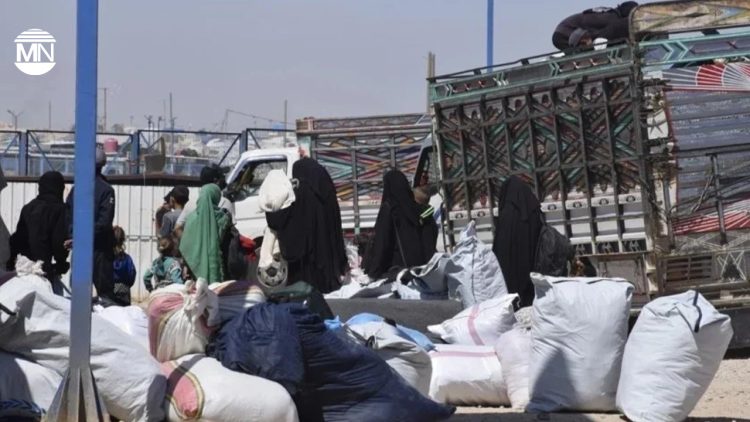
In parallel, recent developments surrounding the Al-Hol camp—a facility currently holding over 37,000 people, many of them family members of suspected Islamic State (ISIS) militants—have further influenced the talks. Kurdish authorities have agreed to the repatriation of families from the camp to government-controlled areas while retaining administrative and security oversight, demonstrating a willingness to cooperate on sensitive security issues.
Related article
AANES, Damascus reach agreement on return of Syrian families from al-Hol camp
As Syria enters a critical phase of post-conflict reconstruction, the outcome of the discussions between the Autonomous Administration and the Syrian government holds the key to the future governance of the country. A landmark agreement could pave the way for the participation of long-excluded communities in the country’s future, whereas failure could further exacerbate the divisions worsened by over a decade of conflict.
With the 30 May visit approaching, the political future of Syria’s northeast—and perhaps of Syria itself—hangs in the balance, navigating the complexities of war, identity, and power.
Related articles
Syrian Kurdish leaders warn return to centralised system risks new conflictKurdish delegation to discuss Syria’s future with Damascus amid divergent visionsSyrian government and Kurdish-led SDF forge historic integration agreementKurdish forces in Syria push for decentralisation amid shifting political landscape