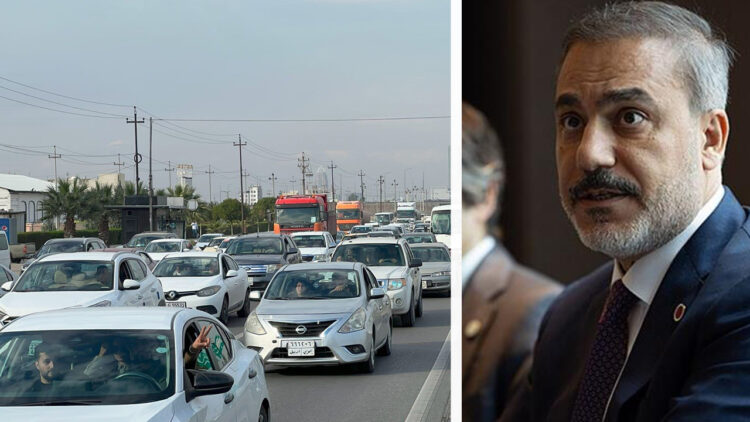
On 23 November, Turkey’s Minister of Foreign Affairs Hakan Fidan referred to his country’s relations with Sulaymaniyah (Silêmanî) in the Kurdistan Region of Iraq (KRI), saying that Sulaymaniyah’s political administration has yet to provide a satisfactory response regarding its relationship with the Kurdistan Workers’ Party (PKK).
In the same speech, Fidan commented on last week’s census in Iraq and the KRI, remarking, “We are closely monitoring the census in Kirkuk and its results. We are against any manipulation of the city’s population figures or demographic changes.”
Fidan addressed Kirkuk from Ankara, saying, “We do not want a governor in Kirkuk under the influence of the Kurdistan Workers’ Party [PKK].”
In this context, Öncü Keçeli, spokesperson for the Turkish Ministry of Foreign Affairs, said on his X account: “Although the census did not collect data on ethnicity, the heavy population movements has rightly caused concern among the Iraqi Turkmen and Arab communities. Clearly, this irregularity would lead to the inclusion of many people who are not originally from Kirkuk in the province’s population. This fait accompli would also impact the elections that will be held in the future.”
These remarks point to Turkey’s apprehension about the significant return of Kurds to Kirkuk to participate in the recent census. Following statements by the Turkish authorities, Hasan Turan, the head of the Turkmen Front in Kirkuk, declared that the census is being accompanied by significant attempts to alter the city’s demographics.
This, the 27th census of Iraq and the KRI, excluded ethnicity and religion from its forms. It is likely that this decision was driven by the presence of two million Arabs in the KRI and the growing number of Shiites compared to Sunnis.