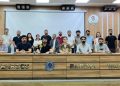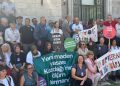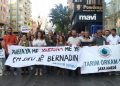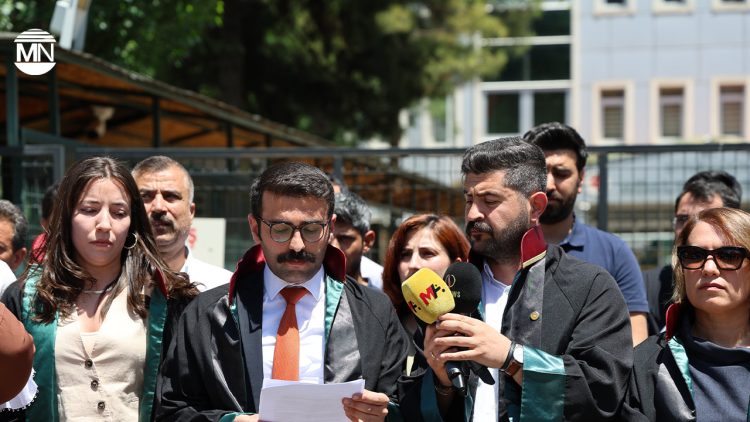
Lawyers from the Association of Lawyers for Freedom (ÖHD) staged simultaneous demonstrations in multiple Turkish cities, during the week marking the Kurdish Language Day, calling on the state to recognise Kurdish as an official and educational language.
Demonstrations took place outside courthouses in cities including Diyarbakır (Amed), Mardin (Mêrdîn), Şanlıurfa (Riha), Mersin, İzmir, Ankara, and Şırnak (Şirnex), drawing broad support from human rights groups, bar associations and civil society organisations.
At the Diyarbakır Courthouse, members of the ÖHD and the Human Rights Association (İHD), along with representatives of the Amed Bar Association and other civic groups, gathered to read a joint statement in both Kurmancî and Kirmanckî dialects.
“Kurdish is not only the identity, culture and existence of the Kurdish people,” said Gülbahar Ateş, a member of the ÖHD Kurdish Language Commission, “It is a fundamental value of humanity.”
The joint statement emphasised five core demands:
– Legal recognition of Kurdish as an official language;
– Kurdish-medium education from pre-school to university;
– Restoration of place names and other nomenclature to their original Kurdish forms;
– Removal of all legal and practical restrictions on Kurdish usage;
– Acknowledgement of the political and legal status of the Kurdish people to ensure lasting language freedom.
The calls reflect long-standing grievances over the suppression of the Kurdish language in public life and education in Turkey, where only Turkish is currently recognised as the official state language.
In Şanlıurfa, lawyer Müslüm Saraçoğlu described Kurdish as “the key to freedom” and referenced Kurdish leader Abdullah Öcalan’s February appeal for peace and democratic dialogue, linking it to the renewed push for Kurdish linguistic rights. “Honourable peace requires lifting all restrictions on Kurdish,” he stated.
At other events, banners carried slogans such as “Be ziman jîyan nabe” (No life without language) and “Zimanê me rûmeta me ye” (Our language is our honour).
In İzmir, Kurdiye Sağnıç Irgat of the Avesta Language and Culture Association said the denial of Kurdish status endangers not only the language but the rich cultural heritage built upon it. “Without legal recognition, the writings and contributions of the Kurdish people cannot be protected,” she said.
Participants also criticised the Turkish Constitution for failing to acknowledge Kurdish and called for reforms to ensure Kurdish-speaking citizens can live and express themselves freely.
The ÖHD called on all Kurdish organisations, political parties and international institutions to support the movement for Kurdish linguistic and cultural rights, framing it as a universal human rights issue.