

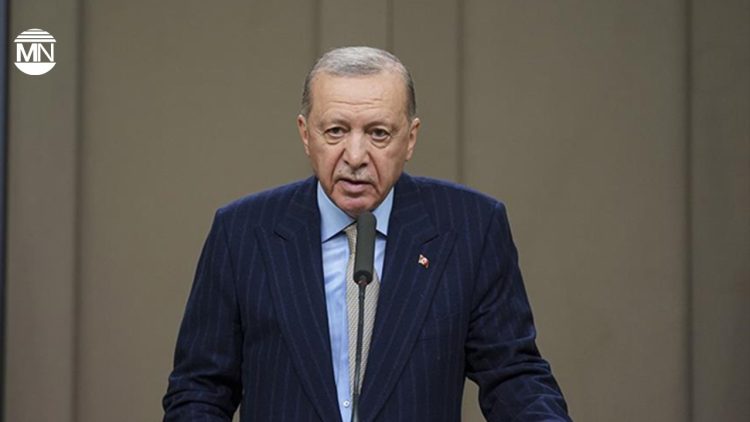
Turkish President Recep Tayyip Erdoğan said his government remains committed to resolving the Kurdish question as a “state policy”, underscoring Ankara’s intent to continue its controversial approach to Kurdish relations, just hours before flying to the NATO summit in the Netherlands on Tuesday.
At Ankara’s Esenboğa Airport before departing for The Hague, Erdoğan told the reporters, “We are determined to bring this process, which we carry out as a state policy, to a successful conclusion.”
His comments come as Ankara attempts to reassert its role in regional diplomacy and domestic stability, following renewed clashes in Kurdish-populated areas of Turkey and tense negotiations between Kurdish groups and the Syrian government.
When questioned about a recent Islamic State (ISIS) attack on a church in Damascus, Erdoğan linked regional terror threats to the broader Kurdish question. “Whatever happens around us, we will not waver in our march toward a terror-free Turkey,” he said. “Terror has long been used as a tool in this region. We know the bloody face of ISIS better than most.”
The president also claimed that Ankara had delivered significant blows to ISIS during its 2016 Euphrates Shield operation in northern Syria, and extended condolences to Syrian civilians affected by recent violence.
Erdoğan further stated his support for the Syrian government’s efforts to eliminate terrorist groups and hinted at increasing cooperation between Ankara and Damascus, despite previous hostilities. “Syria’s determination in fighting all terror organisations, including ISIS, is evident. We will continue to offer them the necessary support,” he said.
In the same address, Erdoğan made a direct appeal to NATO allies, urging them to lift all restrictions on arms trade within the alliance. “Obstacles to defence trade between allies must be removed—without conditions or excuses,” he said, as Turkey continues to expand its military capabilities amid complex geopolitical manoeuvres.
While Erdoğan’s statements signal some progress in Turkish state policy on the Kurdish issue, the opposition in Turkey remain sceptical, citing a lack of inclusive dialogue and continued operations against opposition figures.


