

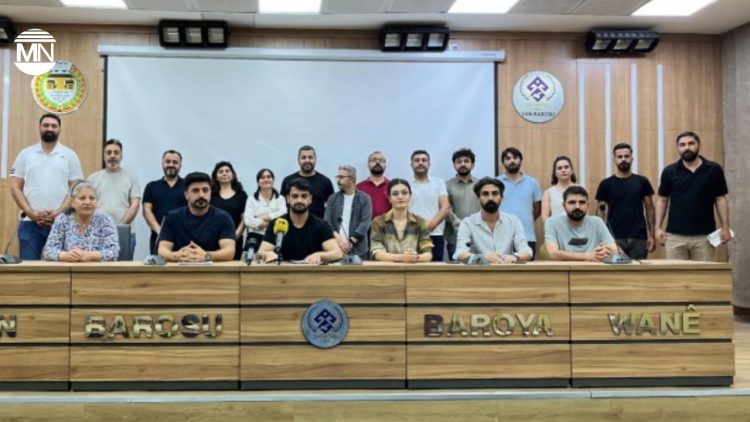
Widespread violations of basic human rights in Turkish prisons have been documented in a new report released on Friday by legal and civil society groups based in the city of Van (Wan), highlighting intensified isolation measures and arbitrary restrictions across nine facilities.
The report, based on visits to prisons in Van, Patnos (Panos), Iğdır (Îdir), and other eastern and Black Sea provinces, concludes that “even the most basic human rights of inmates have been suspended,” and that “inmate isolation has reached its most extreme level.” The findings were presented by the Association of Lawyers for Freedom (ÖHD), the Van Bar Association, the Medical Chamber of Van and Hakkari (Colemêrg), and the union for health workers SES, among others.
“In some prisons, inmates are denied medical transfers entirely if they refuse mouth searches or handcuffing,” said ÖHD representative Özgür Ecer at the press briefing. He added that Kurdish-language books and letters are withheld on the grounds they are “not translated”, while access to critical newspapers and opposition television channels is routinely blocked.
The report also states that food provision is inadequate in both quantity and quality in several prisons. COVID-19 restrictions on sports, workshops and courses remain in place, despite the end of the public health emergency, further contributing to what the groups describe as prolonged and unlawful isolation.
“Inmates are denied visual phone calls and told that there is no infrastructure to support the service, even though others convicted of criminal offences are granted this right,” Ecer said. He also described how routine cell searches had turned into punitive raids, with belongings scattered and military-style discipline imposed.
The organisations called for the immediate closure of Patnos L-Type prison, citing its deteriorated physical condition, humidity and uninhabitable environment. They also demanded the abolition of “Observation and Classification Boards”, which have the authority to prevent prisoner releases without clear justification. The boards were introduced under a controversial regulation empowering prison administrators with broad discretionary powers.
The report recommends restoring inmates’ access to social spaces and communication tools, emphasising that social isolation “should not be used as a security measure” and referencing the European Court of Human Rights’ stance that total sensory and social isolation amounts to inhuman treatment.
It also stresses the importance of media access for prisoners to follow current affairs and maintain mental engagement. “Restrictions on publications and the book quota system violate inmates’ freedom of expression and right to information,” the report states, calling for these limitations to be lifted immediately.
Finally, the report urges the Ministry of Justice to ensure access to healthcare and to suspend or postpone sentences for seriously ill inmates who cannot be adequately treated under prison conditions. “Continuing to hold such inmates violates the right to life,” the authors concluded.


