

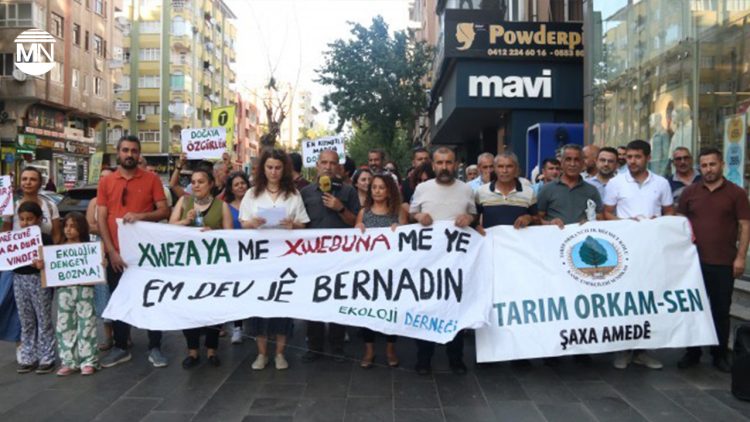
Environmental and civil society organisations in several cities across Turkey have staged coordinated protests over the past week in response to a controversial legislative proposal that would permit mining operations in olive groves and other ecologically sensitive areas, including forests, wetlands, and pastures. Public statements were issued in cities including Van (Wan), Mersin, Artvin, Mardin (Mêrdîn), İzmir, Diyarbakır (Amed), and Tunceli (Dêrsim), denouncing the proposed law as a threat to biodiversity, rural communities, and democracy.
“This is not a law to protect nature—it’s a law to destroy it,” said Dilek Akdağ of the Van Ecology Association. Critics argue that the law prioritises corporate profits, especially in the energy and mining sectors, over public well-being and environmental protection.
Protesters also condemned the weakening of environmental oversight mechanisms, such as Environmental Impact Assessments (EIA), warning of potentially catastrophic consequences for biodiversity and democratic participation in land-use decisions. Several prominent Members of Parliament representing the Peoples’ Equality and Democracy (DEM) Party were present at the Van demonstrations, including Diyarbakır (Amed) MP Mehmet Kamaç and Van Provincial Co-Chair Veysi Dilekçi.
In Mardin, Felemez Öner of the Democracy Platform said:
EMBED QUOTE: “It is a matter of democracy, equality, and the future. Saying yes to a law that will destroy the nature, villagers, and workers of this country is to be complicit in this crime. We call on the public: if this law passes, not only olives but our future will also darken. That’s why we must say, stop!”
In İzmir, the city’s Labour and Democracy Forces issued a public statement denouncing the proposed legislation. At the protest, held at the Türkan Saylan Cultural Centre, a banner read, ‘A state built with concrete will be buried with seeds’. Nuri Seha Yüksel, Secretary of the İzmir Medical Chamber, warned that commercially driven mining projects were advancing despite severe environmental impacts.
In Diyarbakır, the Labour and Democracy Platform made a statement in front of AZC Plaza in the Yenişehir district, demanding the bill’s withdrawal. Deniz Köçeroğlu, Women’s Secretary of the Tarım Orkam-Sen Amed Branch, emphasised the primordial and life-giving role of wilderness in her speech, prompting protesters to chant: “No life without nature!”
In Tunceli, a statement was made in Şehit Rıza Square (Rıza Square), named after the Kurdish political leader who led the Dêrsim rebellion against the Turkish state in 1937. Also in attendance was Cevdet Konak, the DEM Party co-mayor of Tunceli, who was ousted late last year and controversially replaced by a government-appointed trustee.
Orhan Kahraman, of the Tarım Orkam-Sen Tunceli Branch, criticised the suggestion that “olive groves are relocatable”, saying it flies in the face of environmental science. He continued:
“The allocation of pasture areas for private investment is being eased under the guise of ‘public benefit’. The EIA process is being rendered ineffective; silence from institutions is being taken as approval. Illegal facilities are being granted amnesty, and unauthorised investments are being legalised.”
As opposition mounts, environmental organisations vow to continue resisting exploitation and ecocide in rural Turkey.


