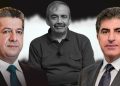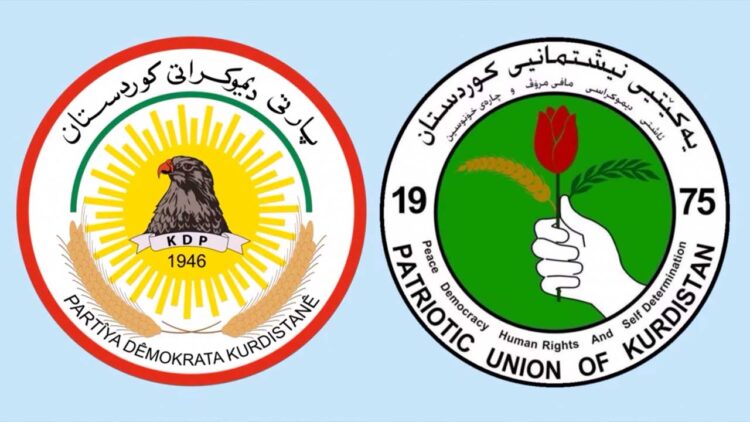
With the official campaign period for election of the sixth parliament of the Kurdistan Region of Iraq at an end as of 15 October, tensions between the Kurdistan Democratic Party (KDP) and the Patriotic Union of Kurdistan (PUK) continue to simmer. Speaking in Dohuk (Dihok) and Erbil (Hewlêr), the PUK’s Bafel Talabani addressed his audience with fierce rhetoric, underlining his intention to change the region’s political system.
During campaign rallies in Dohuk and Erbil, cities largely influenced by the KDP, Talabani sharply criticised that party on four points: authoritarian governance, political and economic corruption, its collaboration with external actors, particularly Turkey, and the ineffectiveness of the Kurdistan Regional Government (KRG), where the KDP has a majority. Talabani assured voters that the PUK leadership would pursue significant changes to the current political framework in the KRG.
In Dohuk, Talabani highlighted his dissatisfaction with the KDP’s current approach to governance, condemning the party’s authoritarian policies, which he claimed have hindered freedom of expression and delayed solutions to the Kurdish issue in Turkey, and in the autonomous North and East Syria (Rojava). He went further, accusing the KDP of compromising on the fate of the Yazidi community in Sinjar through its dealings with Turkey.
In Erbil, directly addressing KRG Prime Minister Masrour Barzani, Talabani vowed to curb the KDP’s alleged exploitation of Kurdistan’s hydrocarbon resources.
“We will not allow the KDP to siphon off Kurdistan’s wealth for political gain, benefitting only a select few within the Barzani circle,” he declared. “We will bring an end to the corruption by a powerful minority in the KRG, and we will dismantle the mechanisms that have driven the region towards a police state. We will put an end to land seizures, violence and injustice.”
In a rebuttal during a campaign rally in Erbil on 15 October, the KDP’s Masoud Barzani dismissed Talabani’s accusations, reiterating the KDP’s electoral strength.
“The KDP has consistently earned the majority vote, and this election will be no different,” he asserted. “After the election, tensions must subside, as the KDP’s actions speak louder than the empty promises of others.”
As the 20 October elections draw near, Bafel Talabani’s denunciations of the KDP’s so-called “police-state” policies have reached new heights, further inflaming tensions.
Meanwhile, neighbouring powers Iran and Turkey are manoeuvring to influence these political dynamics. Iran has created a special committee to mediate between the KDP and the PUK, while Turkey has taken a more direct approach, inviting Nechirvan Barzani for election-related discussions.
The fierce rivalry between the PUK and KDP has driven significant financial outlays on the campaign trail. According to Iraqi Kurdistan regional media reports, campaign expenditures have approached $25 million, with the KDP responsible for the largest share of this spending, some of which is alleged to have been spent on bussing in fake voters from Hakkari in southeast Turkey.