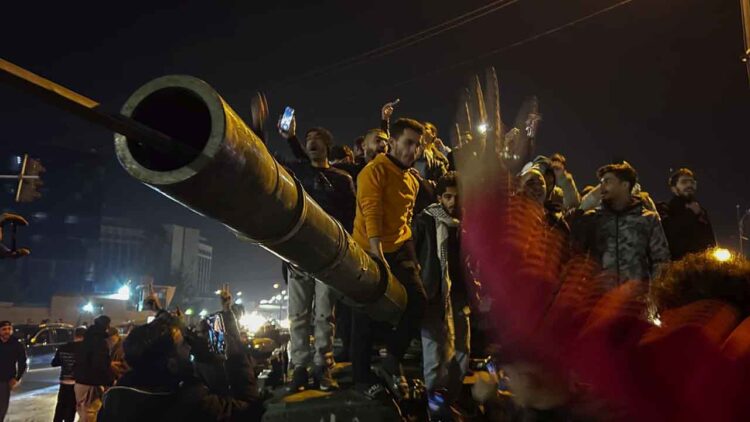
The Assad regime collapsed last night as Islamist militias led by Hay’at Tahrir al-Sham (HTS) seized control of Homs and Damascus. Syrian President Bashar al-Assad fled to an undisclosed location, marking a historic shift in the region. HTS leader Abu Mohammad al-Julani called for restraint, instructing opposition forces not to occupy state institutions until a formal transfer of power is organised. Reports suggest that elements of the former government may have reached agreement with the HTS to facilitate this transition.
The Autonomous Administration of North and East Syria (AANES) declared a state of emergency in response to the unfolding crisis. Kurdish leaders delivered peaceful messages, stressing the need for dialogue and unity during these uncertain times. General Mazloum Abdi, Commander of the Syrian Democratic Forces (SDF), described the moment as “historic”, saying, “In Syria, we are living through historic moments as we witness the fall of the authoritarian regime in Damascus. This change presents an opportunity to build a new Syria based on democracy and justice, that will guarantee the rights of all Syrians.”
Ilham Ahmed, Co-chair of Foreign Relations for AANES, echoed this sentiment, saying, “The time of tyranny is over. Today, we close the page of the past, and open the door to hope for a better future based on justice and democracy for all Syrians. Let us stop the sound of bullets and make dialogue the foundation of peace and rebuilding.”
Yesterday, in a post on X (formerly Twitter), Donald Trump acknowledged the opposition’s gains while advocating for US non-involvement, saying, “Opposition fighters in Syria… are obviously preparing to make a very big move to take out Assad… Syria is a mess, but it’s not our friend, and the United States should have nothing to do with it. This is not our fight. Let it play out.”
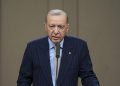
Meanwhile, Turkish President Recep Tayyip Erdoğan underlined Turkey’s security priorities, tweeting, “Syria belongs to Syrians of all ethnic, sectarian and religious identities… We will not allow any moves by separatist terrorist organisations that threaten our national security.” Erdoğan hinted at Turkey’s opposition to Kurdish forces, portraying them as a threat to regional stability.
However, in a statement issued on Saturday, the White House reaffirmed its continued support for the Syrian Democratic Forces (SDF). National Security Adviser Jake Sullivan stressed: “We will take steps ourselves, directly and working with the Syrian Democratic Forces, to ensure that the fighting in Syria does not lead to a resurgence of ISIS.” The US reaffirmed its commitment to preventing a humanitarian catastrophe and maintaining stability in Syria.
As the fall of the Assad regime ushers in a new era of uncertainty, the Kurdish political leadership remains determined, calling for unity and preparedness as the balance of power shifts. Their peaceful stance signals readiness for the challenges and opportunities that lie ahead in Syria’s evolving political landscape.