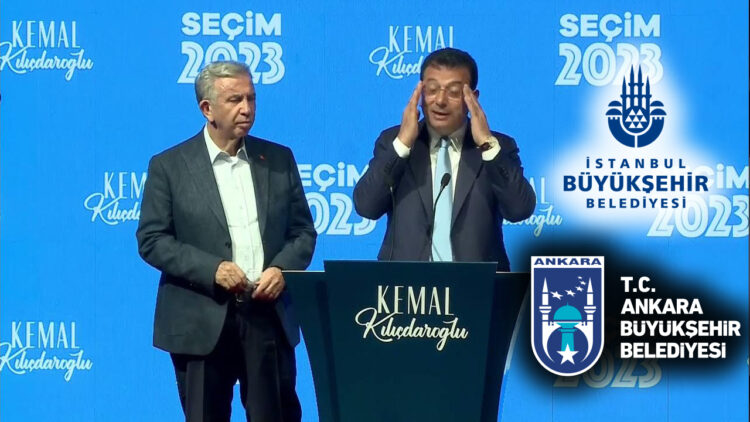
The ruling Justice and Development Party (AKP) government in Turkey has intensified investigations into the metropolitan municipalities of Ankara and Istanbul, which are run by opposition parties. Mayor of Ankara Metropolitan Municipality Mansur Yavaş and Mayor of Istanbul Metropolitan Municipality Ekrem İmamoğlu described the recent investigations and enforcement processes against their municipalities as ‘political pressure’.
The investigation initiated in Ankara Metropolitan Municipality centred on concert and event expenditures organised by Ankara Metropolitan Municipality (ABB). This investigation conducted by the Ministry of Interior is seen as the first step towards the financial structure of the municipality. At the same time, Mayor Mansur Yavaş claimed that various seizure procedures were also initiated against the municipality, and that this was aimed at putting the municipality’s financial management in a difficult situation. “This is a collective offence against our municipality and is being carried out as part of a planned pressure process,” Yavaş said. Stating that the seizures, which limit the municipality’s sources of income, could make service delivery difficult, Yavaş argued that the AKP is tightening its financial control over opposition municipalities.
Mansur Yavaş stated on his social media account that two property inspectors were sent by the Ministry of Interior on 11 November to examine the issue and that the investigation is still ongoing. “There is no one above us in accountability. We stand by our promise; if anyone is guilty, they will be punished. We expect the same behaviour from all public institutions and municipalities,” Yavaş said.
A similar situation applies to the Istanbul Metropolitan Municipality. Within the scope of the new investigation against Istanbul Metropolitan Mayor Ekrem İmamoğlu, some services and expenditures of the municipality were scrutinised. Imamoğlu described these investigations as ‘judicial harassment’ and claimed that they were acting in line with the instructions of the government. “I would be honoured by such audit requests, but the aim here is to damage the reputation of our municipality and prevent our work,” İmamoğlu said, stressing that they are open to audit processes, but that these steps are a political operation.
Such pressures on the financial management of opposition municipalities have put the relationship between local governments and the central government back on the agenda in Turkey. While the ruling party is attempting to keep opposition-led municipalities under its control by limiting them economically and increasing judicial controls, mayors see these steps as ‘systematic pressure’.
According to experts, the AKP’s steps are aimed at narrowing the scope of governance in metropolises where the opposition is influential and consolidating its own electoral base. Municipalities, on the other hand, warn that these processes may lead to disruption of services in the city and problems affecting the daily lives of citizens.