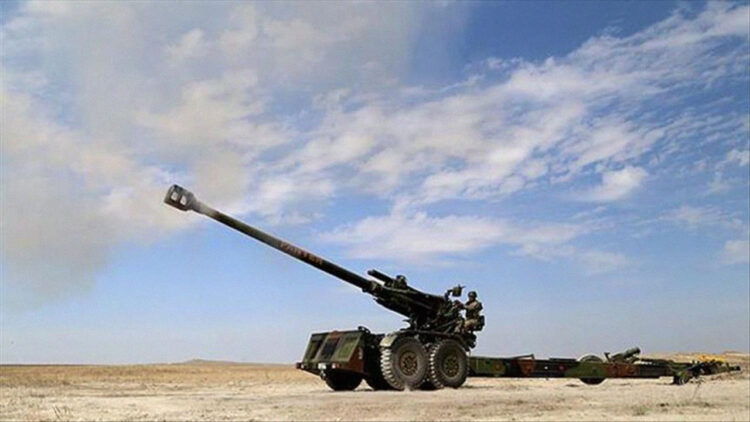
Manbij (Minbic), a city that has become a flashpoint in northern Syria, is enduring relentless attacks by Turkish forces and their allied militias Syrian National Army (SNA), resulting in devastating civilian casualties and mass displacement. The Syrian Observatory for Human Rights (SOHR) reported that artillery shelling in Zarfan village, east of Manbij, killed ten civilians, while a separate Turkish drone strike in Ain Issa wiped out an entire family of eleven, including six children.
The assault comes amid a broader offensive launched by Turkish-backed SNA to seize control of Manbij, a city long considered crucial to Kurdish self-governance in the region. The Manbij Military Council, part of the Kurdish-led Syrian Democratic Forces (SDF), has confirmed that their fighters are holding the line against relentless incursions, describing the attacks as part of Turkey’s strategy to destabilise the region. In a statement, the council noted, “Our forces have demonstrated extraordinary resistance, repelling all advances while inflicting significant casualties on the attackers.”
The human cost of this escalation is severe. Entire families, such as those killed in Ain Issa, have been wiped out, and residents of Manbij are fleeing an masse to neighbouring areas like Kobani (Kobanê) and the eastern Euphrates countryside. Witnesses describe scenes of looted homes and burning villages as Turkish-backed militias consolidate control in parts of the city. A displaced resident who fled to Kobani described the situation as “a nightmare of violence and destruction”.
Manbij’s strategic location west of the Euphrates River has made it a target for Turkish military ambitions. Turkey regards the SDF, which played a key role in defeating the Islamic State (ISIS), as a terrorist organisation due to its ties with the Kurdistan Workers’ Party (PKK). For Ankara, the campaign against Manbij is framed as a necessary measure to “guarantee security” in northern Syria, but critics argue it is a thinly veiled attempt to expand Turkish influence and suppress Kurdish autonomy.
The SDF, in a separate statement, urged global powers to act decisively against Turkey’s aggression, warning that continued instability in the region could enable a resurgence of ISIS. Despite these warnings, the response from the international community has been muted, with key actors such as the United States focusing on counterterrorism operations elsewhere in Syria.
While independent monitors such as SOHR and Kurdish media outlets have documented civilian suffering and the Turkish-backed SNA’ brutality, prominent news agencies portrayed the offensive as a campaign to clear “terrorists” from Manbij, echoing Ankara’s narrative without adequately addressing the impact on civilians or the broader implications of the conflict.
The ongoing violence in Manbij raises questions about the future of northern Syria and the ability of Kurdish forces to maintain control over the region. As the Turkish offensive continues, the SDF remains steadfast, vowing to defend Manbij against all odds.
The crisis has left thousands displaced, homes destroyed, and families torn apart, with no end in sight. Manbij’s struggle is not just a local tragedy; it is a stark reminder of the fragile balance of power in Syria and the devastating consequences of unchecked aggression. As the battle rages on, the people of Manbij face an uncertain future, caught in the crossfire of regional ambitions and global indifference.