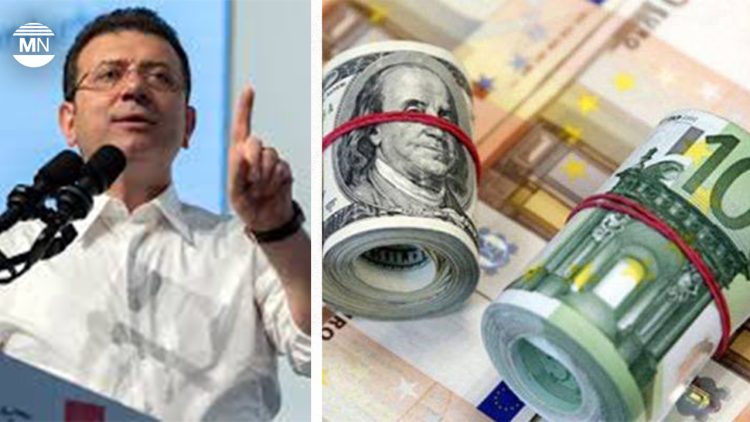
The Turkish lira suffered a sharp decline on Tuesday after İstanbul Mayor Ekrem İmamoğlu was taken into custody, sending shockwaves through financial markets already struggling with inflationary pressures and investor concerns.
The lira dropped to a historic low of 41.64 per US dollar, breaching the 40-lira threshold for the first time. Against the euro, it slumped to 44.88, marking another record. Meanwhile, gold prices soared, with gram gold exceeding 4,000 lira, as investors sought safe-haven assets.
The İstanbul Stock Exchange (BIST 100) also plummeted, opening with a 6.87% decline, triggering the automatic circuit breaker. Trading was temporarily halted to prevent further losses.
Financial analysts attribute the lira’s collapse to heightened uncertainty following İmamoğlu’s detention, which investors interpret as a signal of increasing political instability.
İmamoğlu’s arrest is the latest in a series of moves perceived as government crackdowns on opposition figures. His detention follows previous legal challenges and coincides with broader concerns about the erosion of democratic institutions in Turkey.
The political crisis has cast doubt on Turkey’s economic outlook. Foreign investors have already been cautious due to inflation exceeding 65% and concerns over monetary policy. The latest turmoil risks accelerating capital flight, further weakening the currency.
“Markets react negatively to political instability. Investors seek predictability, and these developments undermine confidence in Turkey’s economic future,” said a senior financial analyst at a London-based investment firm.
One key aspect of the market’s reaction is its link to the urban consensus—a political strategy in which the main opposition Republican People’s Party (CHP) and the pro-Kurdish DEM Party fielded joint candidates in major cities, including İstanbul. This alliance led to significant electoral losses for the ruling party.
“Targeting urban consensus, democratic politics, and political cooperation is an expression of frustration over the electoral loss and an act of political revenge,” the pro-Kurdish DEM Party said in a statement.
With the upcoming economic policy decisions in focus, economists warn that sustained political tension could lead to further devaluation of the lira and capital outflows, exacerbating economic woes.