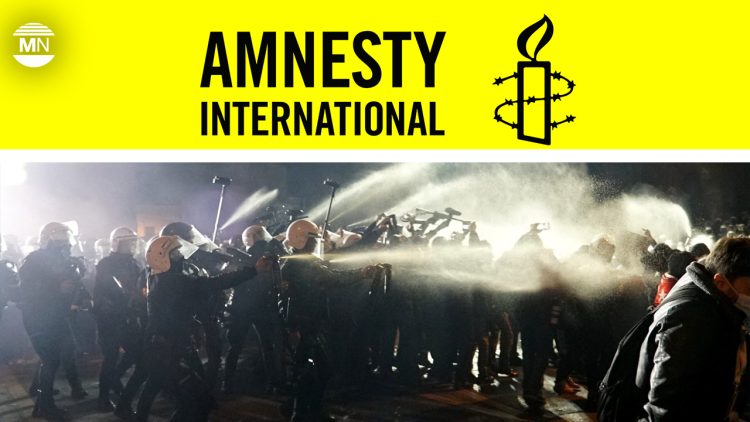
Amnesty International have strongly criticising Turkish authorities for the unlawful and excessive use of police force against protesters following the arrest of Istanbul Mayor Ekrem İmamoğlu on 19 March, in a detailed report released on 19 June. The mayor’s detention triggered widespread demonstrations, with millions taking to the streets to oppose what many perceive as politically motivated actions by President Recep Tayyip Erdoğan’s administration.
The Amnesty report provides evidence of systematic brutality, explicitly stating, “Security forces employed tear gas, water cannons, rubber bullets, and baton charges indiscriminately, often against individuals who posed no immediate threat.” The report further highlights alarming cases involving detained students, asserting:
“Detainees were subjected to severe physical abuse, often continuing long after being subdued, constituting clear acts of torture or cruel, inhuman treatment.”
Public outrage intensified as detailed reports emerged of severe injuries among detained protesters, many of whom were university students, prompting further demonstrations across major Turkish cities such as Ankara, İzmir, and Istanbul. Protesters have consistently demanded the immediate release of those unjustly detained, emphasising their view that these repressive measures aim primarily to suppress potential political challenges ahead of Turkey’s 2028 presidential election. Mayor İmamoğlu, widely viewed as Erdoğan’s strongest political rival, had been expected to pose significant competition, making his arrest particularly contentious.
Related Article:
Police violence intensifies during protests in Turkey following İmamoğlu’s arrest
EU demands Turkey answer for human rights abuses after İmamoğlu arrest
The crackdown also involved sweeping restrictions, including city-wide protest bans, social media limitations, and stringent travel restrictions for Istanbul residents. Amnesty’s analysis highlighted these measures as indicative of a “rapidly shrinking democratic space,” noting that “freedom of assembly, speech, and movement have been significantly curtailed under vague and broadly interpreted security justifications.”
The timing and severity of these measures have raised international concerns, with critics and human rights observers interpreting them as strategic moves by Erdoğan’s government to consolidate power by weakening prominent political opponents and suppressing dissenting voices.
Amnesty International has urged immediate independent investigations and demanded legal accountability for officers and officials responsible. The report concludes that Turkey must urgently comply with its obligations under international human rights law, calling for an end to impunity for police violence and systemic abuses.
As of June 2025, Ekrem İmamoğlu remains in detention, and while protests have continued across the country, they have lost some of their initial momentum. The Republican People’s Party (CHP), the main opposition force, has maintained leadership over the protest movement, albeit with reduced visibility and frequency compared to the first days of the March crackdown. The persistence of demonstrations underscores ongoing public discontent and the broader political significance of İmamoğlu’s case.