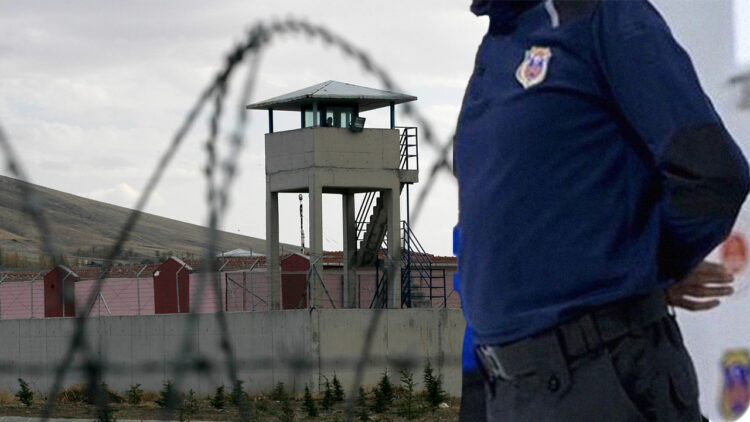
Turkey’s Supreme Court has upheld a lower court’s decision to dismiss charges against 88 defendants in the 1996 Diyarbakır (Amed) prison massacre on the grounds of the statute of limitations, effectively closing the case after 28 years without any convictions. The decision has been criticised by many as yet another example of impunity in the Turkish judicial system.
The massacre took place on 24 September 1996, when 10 prisoners in the Diyarbakır E-Type Closed Prison were beaten to death with iron bars and clubs by prison guards, soldiers and police officers. A further 24 prisoners were seriously injured in the attack, which was carried out to quell what the authorities described as a riot against planned prisoner transfers.
In 2007, a trial concluded with 62 of the original 72 defendants being sentenced to five years in prison for “exceeding the limits of intention to cause death” and “misconduct”. However, subsequent appeals saw the case return to court several times, with the Supreme Court citing procedural errors in its decisions to overturn earlier verdicts.
In 2019, a lower court dismissed charges against the remaining defendants, citing the statute of limitations. Despite appeals from the victims’ lawyers, who argued that the crimes should not be subject to such time limits, the Supreme Court has now upheld the decision.
The only exception in this case was Muhammed Özdil, whose death in 2005 led to the case against him being referred back to a lower court for a final decision.
This latest ruling comes despite a 2010 European Court of Human Rights (ECHR) ruling that Turkey had violated Article 2 (right to life) and Article 3 (prohibition of torture) of the European Convention on Human Rights in connection with the massacre. Turkey was ordered to pay €798,000 in compensation to the families of the victims. However, no individual accountability for the massacre has ever been established. In a dissenting opinion, a Supreme Court judge argued that a detailed investigation was still needed to determine whether the defendants were acting within the scope of their official duties. If not, the crimes could be tried under laws more favourable to the defendants, avoiding the statute of limitations issue altogether.
The case has reignited criticism of the effectiveness of the Turkish judiciary, particularly in cases involving state violence. The 1990s, often referred to as Turkey’s ‘dark years’, saw many political assassinations. Most of the cases related to these bloody incidents, in which state officials were also involved, remained unresolved after lengthy trials, some of which were dismissed due to the statute of limitations.
The case of the murder of the prominent Kurdish journalist and writer Musa Anter was one such example. Anter was killed in 1992 and no effective investigation was carried out to find his killers. Seventeen years later, the case was reopened following confessions by Aldülkadir Aygan, a former member of JİTEM (a semi-official military intelligence organisation whose existence was long denied by the Turkish authorities). However, no results were achieved. On 20 September 2022, the Anter case was closed due to the statute of limitations.
Recently, two other important cases were closed following Supreme Court rulings, again citing the statute of limitations. In the case of the 1993 killing of nine villagers in the Altınova (Vartinis) district of Muş, where the villagers were burned to death in their homes, the state officials on trial were not convicted, despite the prosecutor’s request for sentences ranging from 180 to 225 years.
Another case that expired due to the statute of limitations in 2024 concerned the disappearance of 11 villagers in Diyarbakır after they were detained by soldiers in 1993. During military operations between 8 and 25 October 1993, 11 villagers from the hamlets of Diyarbakır’s Kulp district were taken into custody. They were never heard from again, and the remains of the villagers were discovered during excavations on 5 November 2004. In a hearing on 19 September 2018, the court ruled to dismiss charges against the defendant, Yavuz Ertürk, relating to ‘forming an organisation to commit a crime’ due to the statute of limitations. Ertürk was acquitted of charges of “instigating the premeditated murder of 11 people” and “inciting the public to rebellion”. However, the First Criminal Chamber of the Supreme Court overturned the acquittal and ruled that the case should also be dismissed due to the statute of limitations.