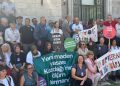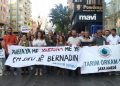
In a sharp escalation of authoritarian measures, Turkish police executed coordinated raids in the early hours of Monday morning across several major cities including Istanbul, İzmir and Adana. These operations resulted in the detention of dozens of individuals, among them journalists, political organisers, lawyers and members of opposition parties. The clampdown comes in the wake of sustained mass protests sparked by the arrest of Istanbul Metropolitan Mayor Ekrem İmamoğlu, a central figure in the opposition bloc.
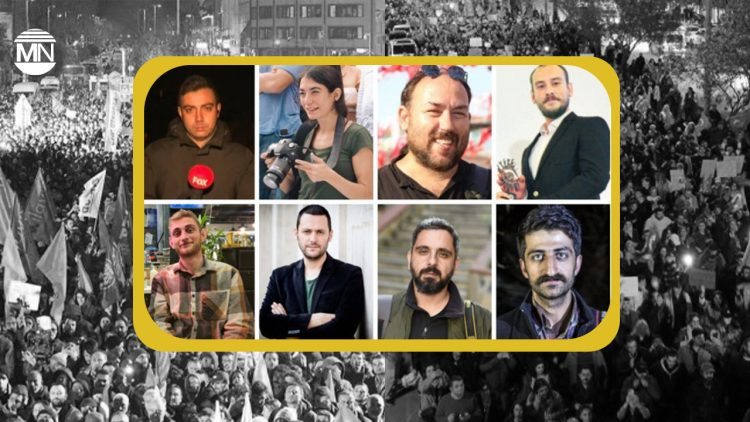
According to reports from Mezopotamya Agency, at least eight journalists were apprehended during home raids in Istanbul and İzmir.
Those detained include high-profile reporters such as Zeynep Kuray, Bülent Kılıç, Hayri Tunç, and Gökhan Kam, as well as AFP correspondent Yasin Akgül. Additional detainees include NOW reporter Ali Onur Tosun, BirGün columnist Barış İnce, Sendika.org journalist Zişan Gür, and Kurtuluş Arı, a photojournalist employed by Istanbul’s city administration. In İzmir, veteran photojournalist Murat Kocabaş was also detained.
The raids coincided with widespread demonstrations across metropolitan centres including Ankara, Eskişehir and İzmir. Protesters—many of whom describe the developments as a “civil coup”—have decried what they see as the erosion of democratic principles under President Recep Tayyip Erdogan. Imamoglu’s arrest, along with that of over 100 individuals tied to civil society and opposition politics, has galvanised public outrage.
In Istanbul, police specifically targeted the leadership of the Communist Party of Turkey (TKP), arresting its provincial chair Ahmet Dincel, senior member Arda Hacıyusufoğlu and three others. Similarly, SOL Parti (Left Party) confirmed that several members, including its executive board member and lawyer Deniz Demirdöğen, were among those detained.
Related Articles:
Turkish Interior Ministry suspends İmamoğlu as Mayor of Istanbul
In İzmir, the detentions spanned both political and cultural circles. Those arrested included Didar Gül, a senior member of the Toplumsal Özgürlük Partisi (TÖP), Praksis music group member Soner Küçükergüler, and former Socialist Youth Associations Federation (SGDF) chair Şükran Yaren Tuncer. Other detainees include Gökhan Erdem, Sema Nur Demirtaş, Berk Çukurcam, Mehmet Duman, and Gülşen Sude Avcı. Notably, lawyer Göksel Akbaba—previously removed by police while attempting to visit clients at a courthouse—was also detained. Former İzmir Bar Association President Özkan Yücel was taken into custody as well, raising concerns over legal retaliation.
In Adana, a mass demonstration organised by the Republican People’s Party (CHP) drew thousands to Turgut Özal Boulevard. Protesters marched toward Uğur Mumcu Boulevard chanting slogans such as ‘Government resign’, ‘Justice and rights for all’ and ‘We will win through unity’. The police responded with force, deploying tear gas, water cannons, and rubber bullets to disperse the crowd. Eyewitnesses reported physical assaults during arrests, though the full extent of injuries and detentions remains unclear.
Officials have cited alleged violations of the Law on Assemblies and Demonstrations to justify the mass detentions. However, legal experts and rights organisations argue that the law is being selectively enforced to criminalise dissent and suppress lawful political expression. Analysts suggest the number of detainees is likely to increase as security operations continue.
These detentions have taken place against a backdrop of escalating restrictions on civil liberties. On 20 March, the Istanbul Governor’s Office imposed a sweeping four-day ban on demonstrations and sharply limited internet speeds and access to social media platforms. The ban was subsequently extended for an additional four days. Similar restrictions were enacted by governors in several other cities. Despite these unlawful measures, protest turnout has surged, with hundreds of thousands reportedly taking to the streets in defiance of the bans.
Furthermore, reports indicate that internet throttling and social media restrictions have intensified in recent days, without legal mandate or judicial oversight. Digital rights advocates warn that such arbitrary censorship not only violates domestic law but also international norms on freedom of expression and access to information.
In a notable development, the social media platform X (formerly Twitter) publicly rejected a set of court orders issued by Turkey’s Information and Communication Technologies Authority. These orders demanded the blocking of over 700 accounts, including those belonging to journalists, news organisations, students, and opposition figures. X’s Global Government Affairs office issued a statement affirming its refusal, stating:
“We object to multiple court orders from the Turkish Information and Communication Technologies Authority to block over 700 accounts of news organizations, journalists, political figures, students, and others within Türkiye. Providing a platform committed to defending everyone’s right to free speech is paramount at X, and we believe this decision from the Turkish government is not only unlawful, it hinders millions of Turkish users from news and political discourse in their country.”
In a parallel development, the Radio and Television Supreme Council (RTÜK)—Turkey’s principal media regulator—has issued intensified warnings to media outlets covering the protests. RTÜK has threatened to revoke broadcasting licences and shut down any outlet it accuses of violating national standards or “inciting social unrest”. Press freedom organisations have expressed grave concern, viewing this as an orchestrated effort to suppress independent journalism and deny the public access to accurate information.
Taken together, the mass arrests, suppression of public gatherings, targeted censorship, unlawful digital repression, and threats against the press mark a significant turning point in Turkey’s ongoing democratic decline. The growing mobilisation of citizens, juxtaposed with aggressive state retaliation, suggests a deepening crisis that raises urgent questions about the future of political rights and rule of law in the country.