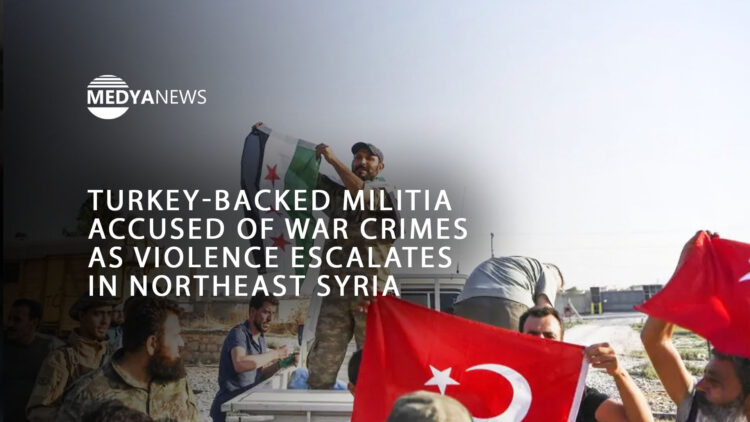
Humanitarian organisations, local authorities and activists have raised serious concerns about the behaviour of Turkish-backed Syrian National Army (SNA) factions in north-eastern Syria. Allegations include systematic looting, violence against civilians and targeted attacks on critical infrastructure, which may amount to war crimes under international law. As the conflict intensifies, civilians and humanitarian operations are bearing the brunt of the violence, highlighting the need for immediate international intervention.
Residents of Manbij (Minbîc) describe an atmosphere of fear and intimidation under the control of Turkish-backed forces. Civilians reported that SNA militiamen have been breaking into homes, particularly targeting individuals associated with the Democratic Autonomous Administration of North and East Syria (AANES). Civilians who have worked for AANES institutions have received threats, even after fleeing to Kobane or Raqqa. SNA forces have been accused of searching phones, harassing residents and intimidating women, making it dangerous for locals to speak out against abuses.
Street protests have broken out in Manbij against widespread looting by SNA fighters. The Kurdish Red Crescent reported that health facilities have been a prime target, with six medical centres, including those supported by international NGOs, vandalised or destroyed. Ambulances have been stolen and the main hospital in Manbij has been rendered inoperable, leaving thousands without access to life-saving healthcare.
The SNA’s actions have also targeted humanitarian efforts in the region. On 10 December, an NGO-supported ambulance was hit on the Srin-Tishreen road, killing a health worker. The following day, a drone attack detonated above an NGO-supported educational facility in Raqqa during children’s classes, forcing an emergency evacuation. Fortunately, no casualties were reported in the Raqqa strike, but humanitarian organisations have suspended several programmes out of fear for the safety of staff and beneficiaries.
The looting of medical centres in Manbij and Raqqa included the theft of medicines, medical equipment and ambulances. According to the NES NGO Forum, the destruction and theft of these resources is jeopardising the provision of life-saving healthcare and putting thousands of vulnerable civilians at risk.
Strikes on the Tishreen Dam, a critical piece of infrastructure that provides electricity to large parts of north-eastern Syria, have caused severe damage. Dam authorities report damaged turbines, severed vital cables and ongoing leaks. Maintenance teams are unable to access the dam due to the hostilities, leaving drainage pumps inoperable and increasing the risk of catastrophic flooding. If the dam collapses, up to one million people downstream could be affected, with farmland, homes and the downstream Tabqa Dam at risk of destruction.
The NES NGO Forum and other organisations have condemned the attacks on the dam, warning that these actions violate international law by targeting civilian infrastructure essential for survival. They have called for an immediate cessation of hostilities to prevent further damage to critical infrastructure.
Violations of international law and allegations of war crimes
Humanitarian organisations argue that the actions of the Turkish-backed SNA violate international humanitarian law and international human rights law. The deliberate targeting of civilians, health workers and essential infrastructure constitutes war crimes under these frameworks. The NES NGO Forum has urged all parties to abide by international legal standards, stop attacks on civilian infrastructure and allow humanitarian workers to deliver aid unhindered.
Reports of war crimes include looting, extrajudicial violence and displacement of civilians. The Kurdish Red Crescent documented that looting by Turkish-backed forces has rendered several service facilities inoperable, while the targeting of health and education facilities raises concerns for the safety of humanitarian workers.
Mazloum Abdi, commander-in-chief of the Syrian Democratic Forces (SDF), has criticised Turkey for enabling the violence. Abdi warned that Turkey and its proxies aim to weaken Kurdish forces politically and militarily, with systematic efforts to destabilise the region. “Turkey wants us out of the political process, but it should understand that its military actions have failed to destroy us,” he said. Abdi also emphasised the SDF’s commitment to dialogue, stressing the need for a Syrian-led solution.
The ongoing conflict has allowed ISIS to exploit the chaos in the region. Abdi warned that ISIS cells are regaining strength in areas of the Syrian desert, taking advantage of the SDF’s engagement with Turkish-backed forces. The Kurdish Red Crescent and the SDF have also reported failed attempts by ISIS-linked families to escape from detention camps. Experts warn that the breakdown in stability could provide ISIS with an opportunity to regroup.
As violence escalates in north-eastern Syria, the actions of Turkish-backed militias, including attacks on civilians, humanitarian workers and critical infrastructure, are drawing widespread condemnation. These alleged war crimes underscore the urgent need for international intervention to hold perpetrators accountable, protect civilians and ensure the delivery of humanitarian aid. Without immediate action, the conflict risks exacerbating an already dire humanitarian crisis in the region.