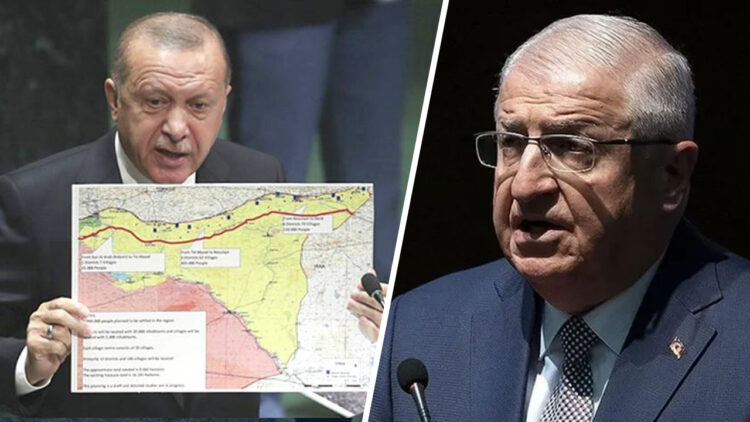
Turkey’s determination to establish a 30-40 km security zone in Iraq and Syria has become a central pillar of its regional policy, as according to Turkish Defence Minister Yaşar Güler in a recent interview with Politico. Güler stressed Turkey’s intention to create this security corridor, citing the need to neutralise threats from Kurdish militants and ensure regional stability.
“We are fully determined to create a 30-40 km security corridor along our Iraqi and Syrian borders and completely clear the region of terrorists,” Güler said.
Despite its aggressive regional policy, Turkey remains committed to its NATO membership. Minister Güler stressed that Turkey values its place in the Alliance, which it joined in 1952. He rejected criticism that Turkey was out of step with its NATO allies, saying: “We absolutely reject the statement that [Turkey] is unreliable; there is no such thing. In an environment where 32 allies are together, it is unthinkable to have the same views on every issue.”
Turkey continues to rely on NATO’s collective security guarantees, in particular the application of Article 5, which treats an armed attack against one member as an attack against all. Turkey has long-term aspirations to have the Kurdistan Workers’ Party (PKK) designated by NATO as a ‘recognised external threat’.
Turkey’s actions have drawn considerable criticism from Iraq. According to Shanaz Ibrahim Ahmed, Iraq’s First Lady, Turkish military operations in the border areas of Duhok province have led to significant displacement. “In recent weeks, there have been verified reports of mass displacement of villagers in the border areas of Duhok province in the Kurdistan region of Iraq. They are fleeing escalating military attacks by neighbouring Turkey, abandoning their homes in search of safety,” Ahmed said.
Human rights organisations, including the Community Peacemaker Teams (CPT), have reported that Turkey has carried out more than 800 incursions into the Kurdistan Region in 2024 alone. These incursions, which include the establishment of checkpoints and patrols on Iraqi territory, are perceived by many as violations of international law and Iraqi sovereignty.
NATO’s agreements with Turkey have been criticised by Kurdish groups and organisations. The Kurdistan National Congress (KNK), in their statement on last year’s NATO summit, argued that these agreements betray democratic values and international human rights conventions. The Kurdistan Communities Union (KCK) stated that Turkey’s actions within NATO aim to erase the achievements of the Kurdish people across Kurdistan, amounting to a significant setback for Kurdish rights and freedoms.
This ongoing conflict highlights the contradictory nature of Turkey’s regional policy and its impact on wider geopolitical dynamics. While Ankara seeks to extend its influence by establishing buffer zones in Syria and Iraq, the resulting displacement and instability in neighbouring regions pose significant humanitarian and legal challenges.