

Syria’s transitional President Ahmed al-Sharaa announced a 22-member cabinet on Saturday to lead the country’s recovery from decades of conflict. The appointments, made nearly four months after the fall of former president Bashar al-Assad on 8 December, aim to restore state institutions, address economic challenges and rebuild the military following a 14-year civil war.
The cabinet includes technocrats and allies of Sharaa, who retains control over the foreign affairs, defence and interior ministries. Hind Kabawat, a Christian, was named Minister of Social Affairs, marking the only female appointment, while Raed al-Saleh, leader of the White Helmets (Syrian Civil Defence), became Minister for Disaster, Emergencies and the Environment.
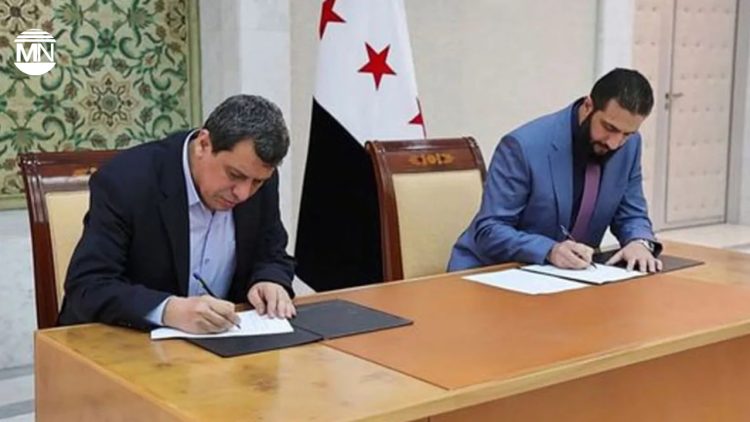
No Kurdish representatives were selected, despite an agreement on 10 March integrating the Syrian Democratic Forces (SDF), a Kurdish-led militia in northeastern Syria, into the state structure. SDF commander Mazloum Abdi described the deal as an opportunity to reshape the country, though the lack of Kurdish voices in the cabinet has tempered expectations.
International responses vary. The United Nations has urged Syria to form a government reflecting its diverse population, which includes Sunni, Alawite, Kurdish, Druze and Christian communities. The United States has tied sanctions relief to the destruction of chemical weapons and action against terrorism, while the European Union has lifted some restrictions on energy and transport sectors. Reconstruction, a pressing issue for a nation devastated by war, continues to be stalled by the remaining sanctions, while clashes between government forces and Alawite armed groups in Syria’s coastal region earlier this month highlighted the need for broader representation.
Sharaa, a Sunni Islamist who rose to power from Idlib province, promised a fresh start in a ceremony at the presidential palace. “We witness the birth of a new phase of our national journey,” he said. A constitutional declaration earlier this month, however, eliminated the role of prime minister and granted Sharaa authority to appoint judges and legislators, centralising power around him. Radwan Ziadeh, a Syrian analyst, highlighted the inclusion of minority figures as a forward-looking step, while researcher Rim Turkmani warned that a lone female minister and the absence of a separate executive undermine the government’s legitimacy.
Related Article :
HTS seeks legitimacy but retains authoritarian rule, says new RIC report
A report by the Rojava Information Center, published on 28 March, details how Hay’at Tahrir al-Sham (HTS) has sought to present itself as a legitimate ruling authority in Syria following Bashar al-Assad’s fall. However, the report highlights that HTS’s governance remains deeply authoritarian, raising concerns over its commitment to political reform.


