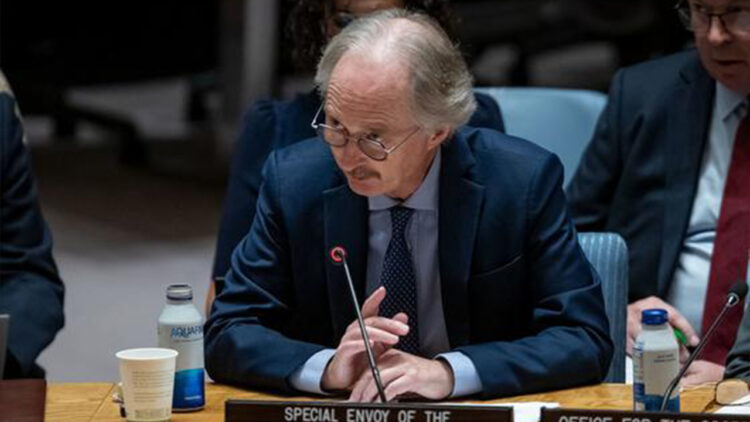
The Syrian conflict risks plunging the country into further division and destruction following a surge in fighting that has “radically altered” the situation within days, UN Special Envoy Geir Pedersen told the Security Council on Tuesday.
“A vast swathe of territory has come under the control of non-State actors, including the terrorist group Hay’at Tahrir al-Sham (HTS) and armed opposition groups, such as the Syrian National Army (SNA),” Pedersen said, highlighting that approximately seven million people, including Aleppo’s population of over two million, are now affected.
Both government and opposition forces have intensified attacks. Syrian government forces have regrouped in Hama, but their positions are under pressure as opposition forces advance. Pro-government airstrikes have targeted civilian infrastructure, including hospitals, while opposition groups have launched rocket and drone attacks, leading to civilian casualties on both sides.
In the northeast, US-supported Syrian Democratic Forces (SDF) seized villages, citing an imminent threat from the Islamic State (ISIS). Simultaneously, Israeli airstrikes on Damascus and the Syrian-Lebanese border have exacerbated the instability.
“The last fourteen years of conflict have decisively shown that no Syrian party can resolve this conflict via military means,” Pedersen stressed, calling for immediate de-escalation and adherence to international humanitarian law.
The UN envoy underscored the need for a credible political process to address Syria’s crisis. “For almost five years, a patchwork of ceasefire arrangements managed to contain violence to some extent. But without a political process, this conflict-management approach is unsustainable—and it has now entirely unravelled.”
Pedersen warned that Syria faces “grave danger of further division, deterioration, and destruction,” urging key Syrian and international actors to pursue a political resolution urgently.
He concluded by reiterating that only a unified and sustained commitment to de-escalation and political dialogue could avert further suffering.