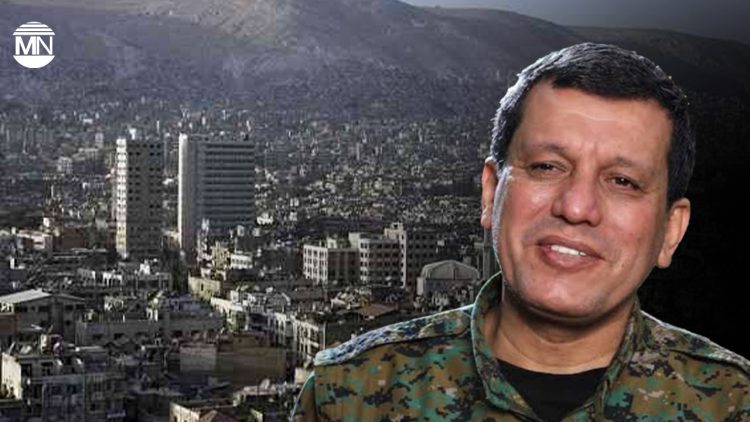
Talks on the proposed military structure within the new Syria have pitted the Kurds firmly against the country’s new Defence Minister, with the Syrian Democratic Forces (SDF) pushing for autonomy within the Ministry of Defence, and the minister rejecting this outright in favour of a unified military structure.
Following the removal of the Assad regime by jihadist factions including Hay’at Tahrir al-Sham (HTS), a transitional government led by HTS chief Ahmad al-Shar’a (aka al-Jolani) has assumed control over the majority of Syria. Meanwhile, the northeast remains under the administration of the Autonomous Administration of North and East Syria (AANES), which is defended by the Kurdish-led SDF, allied with the United States in the fight against ISIS. The SDF plays a pivotal role in safeguarding Kurdish communities and other minority groups within the North and East Syria (Rojava) region. But Turkey’s unwavering opposition to the integration of Kurdish-led forces into the new government has created formidable obstacles to achieving meaningful political unity and long-term stabilisation.
The Kurdish forces advocate for advancing the political process in post-Assad Syria, with the SDF’s Commander-in-Chief General Mazloum Abdi reiterating their core demand for a decentralised administration. Speaking last week, Abdi said that the SDF is open to integration with the Defence Ministry, as long as it need not disband, as an independent “military bloc”. But while on Sunday Syria’s Defence Minister Murhaf Abu Qasra confirmed ongoing negotiations with the SDF regarding their integration into the national army, he warned that military action remains an option if talks fail, firmly rejecting the SDF proposal and stating that all forces must operate under the centralised hierarchy of the Defence Ministry
Since his appointment on 31 December, Abu Qasra has prioritised consolidating Syria’s fragmented military forces, including efforts to incorporate the US-backed SDF. But although the SDF remains a crucial ally in the fight against ISIS, neighbouring Turkey continues to view it as a significant security threat. Abu Qasra has accused SDF leaders of “procrastinating” in the negotiations and reaffirmed that their integration into the national army is a sovereign right of the Syrian state.
Despite lingering disagreements, both sides have signalled a willingness to cooperate on specific issues. Commander Abdi has expressed openness to transferring control of oil resources to the central government, provided that revenues are equitably distributed across all Syrian provinces. Abdi further clarified that the proposed decentralisation is “geographical, not ethnic,” highlighting that the SDF does not seek to establish a separate Kurdish parliament or government.
The situation, however, remains fraught with tension as Abu Qasra has set a firm 1 March deadline to finalise the integration of the SDF into the national military framework, insisting that this process is essential to the sovereignty of the Syrian state.
Meanwhile, international actors are urging restraint. UN Special Envoy for Syria, Geir Pedersen, has appealed for diplomacy, stressing the need for a peaceful resolution to prevent further destabilisation. “We are striving for the emergence of a unified Syria, and hopefully this will include the northeast in a constructive and peaceful manner,” Pedersen stated in Damascus, cautioning that any escalation could exacerbate regional instability.
The desire of the Kurds for establishment of a federal, democratic and secular system in the political future of Syria faces significant challenges, given the complex dynamics and competing interests at play. Turkey’s involvement and support for various opposition groups have had a profound impact on Syria’s trajectory.