In the countdown to parliamentary elections in the Kurdistan Region of Iraq (KRI), set for 20 October, the political scene is dominated by rivalry between the two main Kurdish parties: the Kurdistan Democratic Party (KDP) and the Patriotic Union of Kurdistan (PUK). This long-standing competition has shaped the political landscape of the region for decades.
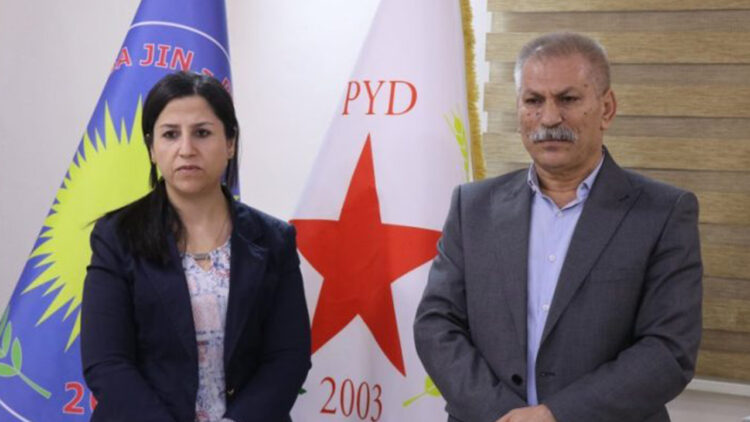
In a statement ahead of the elections, Perwîn Yusif, co-chair of the Democratic Union Party (PYD), a key political group within the Autonomous Administration of North and East Syria (AANES), expressed her party’s support for the PUK. Yusif praised the PUK for its efforts in defending Kurdish interests, particularly against Turkish military attacks. She underscored the PUK’s role in safeguarding the Kurdistan Region from Turkish attacks, warning that political reforms are essential to prevent “family-based partisanship” from eroding democracy.
The KDP, dominated by the Barzani family, controls the northern provinces of Erbil (Hewlêr) and Duhok (Dihok), while the PUK, historically led by the Talabani family, governs Sulaymaniyah (Silêmanî) in the south. The two parties have often clashed over key issues such as resource management, budget distribution, and political governance. The PUK has accused the KDP of withholding funds from Sulaymaniyah, leading to financial difficulties. Bafel Talabani, PUK leader, recently accused the KDP of prioritising its political survival over Kurdish unity, alleging that the KDP aligns with external forces hostile to Kurdish interests.
These internal divisions have been further complicated by Turkey’s growing influence in the region. The PYD’s call, for voters to support the PUK, emphasises the party’s opposition to Turkish interference and its commitment to Kurdish unity. According to the PYD, a victory for the PUK would help to counter Turkey’s “expansionist projects” and protect Kurdish achievements.
“The PUK has become a shield against Turkey’s expansionist projects,” Yusif said, urging voters in the Kurdistan Region to support the PUK in the upcoming elections. “We call on the people of South Kurdistan to back the PUK list to ensure that our shared gains are protected.”
Co-chair Xerîib Hiso also called on voters to support candidates who honour the sacrifices of Kurdistan’s martyrs and defend the region against occupying forces. “Vote for those who will truly represent you, for those who will defeat the oppressors,” Hiso said, praising the PUK’s leadership under Jalal Talabani’s successors for its continued resistance to foreign occupation and commitment to Kurdish values.
With tensions running high between the KDP and the PUK, the outcome of the elections could significantly impact the future political direction of the Kurdistan Region and its relations with neighbouring countries.