

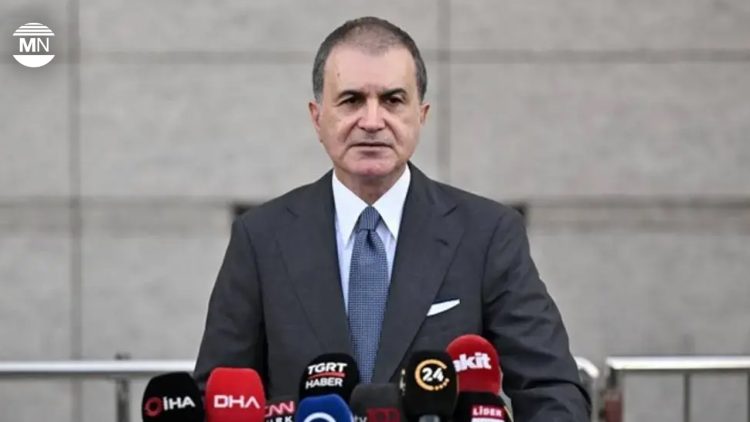
Justice and Development Party (AKP) Spokesperson Ömer Çelik delivered a statement on 4 June outlining his party’s position on the dissolution of both the Kurdistan Workers’ Party (PKK) and the Syrian Democratic Forces (SDF). Çelik asserted that both groups must disarm without preconditions, framing the SDF as an extension of the PKK in Syria, which Ankara considers a security threat.
Çelik’s comments came in response to recent developments in the PKK, including its 12th congress, which resulted in a declaration to end armed struggle and entrust the transition to jailed PKK leader Abdullah Öcalan. However, PKK officials have maintained that any disarmament depends on reciprocal steps by the Turkish state, including legal reforms recognising Kurdish identity and the release of Öcalan.
Despite Çelik’s suggestion that a diplomatic channel with the SDF could open if they disarmed, he stated that no official talks had taken place. This contradicts recent reports indicating direct communication between Turkish officials and SDF representatives.
The SDF, while supportive of the PKK’s peace initiative, has clarified that it does not intend to disarm. SDF Commander Mazloum Abdi stated:
“If this process is successful, it will have a positive impact on us and Turkey will have no excuse to attack our region.”
Similarly, Salih Muslim of the Democratic Union Party (PYD) stressed that the PKK’s disarmament does not apply to Kurdish self-defence forces in northern Syria.
Çelik further called for the removal of what he referred to as “PKK elements” within the SDF and their integration into the new Syrian army. This proposal overlooks concerns about the Syrian Interim Government’s exclusion of Kurdish groups and failure to establish inclusive governance.
While Çelik stated that Turkey is not opposed to Kurdish legal recognition or autonomy in Syria, this contrasts with the ongoing Turkish military operations in Kurdish-majority areas, known as Rojava, and the impact on civilian infrastructure.
Although both the ruling AKP and its ultra-nationalist coalition partner, the Nationalist Movement Party (MHP), have publicly expressed support for a peaceful resolution, their approaches differ significantly. In recent statements, the AKP has used notably provocative language to continue portraying the Kurdistan Workers’ Party (PKK) and affiliated movements as terrorist threats, despite the group’s dissolution and decision to end its armed struggle. By contrast, the MHP, which is often known for its hardline stance, has in this instance adopted a more restrained rhetorical tone. The AKP’s continued use of inflammatory terminology raises concerns about whether the government is genuinely prepared to facilitate a transition towards democratic dialogue and political normalisation.


