Political leaders in North and East Syria have condemned the Damascus government for instrumentalising women as a cover to satisfy societal expectations of gender equality while denying them genuine political power, instead calling for a democratic and decentralised future that ensures full rights and representation for all women.
In statements to local media on 2 June, Kurdish and Syrian women activists accused the interim Syrian government of maintaining patriarchal and authoritarian control through superficial – or show – appointments that do not reflect women’s real voices or autonomy.
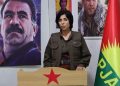
“There is no real representation of women in the Damascus government,” said Narin Metînî, General Secretary of the Future Movement of Kurdistan.
Metînî argued that women in official positions are often chosen not for their independence or leadership but because they align with the regime’s ideology or have been coerced by economic pressure. “Women appointed by the Damascus government lack independent will and freedom of expression,” she warned.
Criticising what she called the government’s “deceptive policies”, Metînî stated that authoritarian regimes treat conscious, educated women as a threat and instead use them to legitimise male-dominated power structures. “To truly respond to this deception, we must build the Free Woman Project and expose these hollow appointments,” she added.
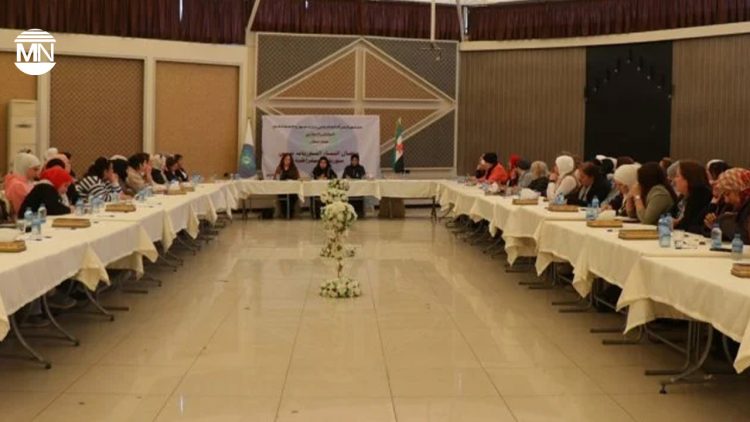
Erîfe Bekir, a member of the Democratic Union Party (PYD) and a leader within the Syrian Women’s Council, also rejected the Damascus government’s approach, stating that its policies are a continuation of those under the former Baath regime. “The coercive policies imposed on women have not eased since the fall of the Baath regime—they have intensified,” she said.
Bekir criticised the regime’s insistence on a singular identity, language and religion, arguing that such a vision erases the country’s diverse social fabric. “Syria is a mosaic of peoples. This reality cannot be ignored,” she said.
Reflecting on the achievements of women in North and East Syria, particularly in the struggle against the Islamic State (ISIS), Bekir said, “Women led the revolution here. They organised themselves and brought the Women’s Revolution to global attention.” She underlined that women in the region reject any return to the Ba’athist past and are actively working to build a democratic, decentralised Syria that secures the rights of all communities.
“We have paid a heavy price throughout history. We will continue fighting until our rights are guaranteed,” she concluded.