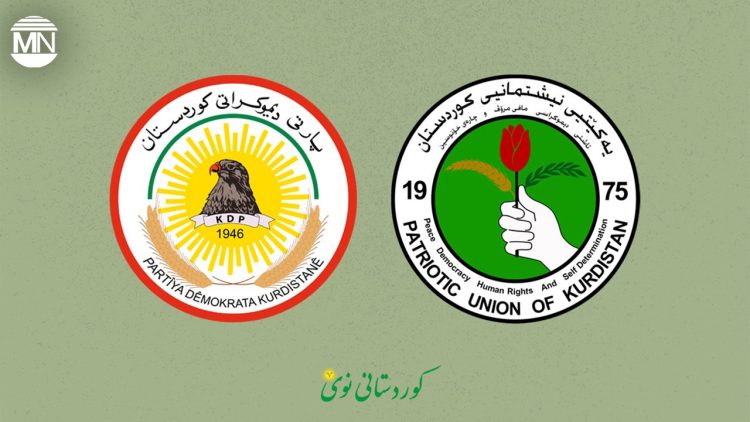
On 4 February 2025, the fifth meeting of the Joint Commission between the Patriotic Union of Kurdistan (PUK) and the Kurdistan Democratic Party (KDP) was convened, marking a pivotal step towards finalising the formation of the 10th Kurdistan Regional Government’s cabinet and the allocation of ministerial portfolios.
The statement issued by the negotiating teams underscores their commitment to fostering a constructive and substantive dialogue, aimed at addressing the expectations of the Kurdish people. Within this framework, a preliminary consensus has been reached on most of the contentious issues. Consequently, the parties have agreed that the High Negotiating Commission will expedite the resolution of outstanding matters.
Riwas Faiq, a member of the political board of the PUK, acknowledged that despite notable progress, key points of contention remain unresolved, particularly regarding the procedural mechanisms of cabinet formation.
Taking a more optimistic stance, Fawzi Hariri, head of the Supreme Council of the Kurdistan Region, remarked:
“There is a shared understanding regarding the formation of the Kurdistan Regional Government’s cabinet. In light of this constructive atmosphere and the emphasis on cabinet establishment, I firmly believe the government should be formed before the commencement of Iraq’s general elections.”
According to Channel 8 TV, based in Sulaymaniyah (Silemani), both commissions have reached a consensus on the initial draft of a 17-page agreement, encompassing nine key topics and nine issues. The agreementttps://manage.rudaw.net/sorani/kurdistan/0402202514 a wide range of critical issues, including parliamentary administration, financial affairs, Erbil-Baghdad relations, energy governance, and the restructuring of the Kurdistan Armed Forces (Peshmerga).
In the sixth round of parliamentary elections last year, the KDP secured 39 seats, while the PUK obtained approximately 23.
With a voter turnout of 72 percent, the final results of the Kurdistan Region’s parliamentary election, held on 20 October 2024, reaffirmed the KDP, as the dominant political force with 761,000 votes, followed by the PUK with 400,000 votes. The New Generation Party, securing over 277,000 votes, has positioned itself as a significant challenger to the two main Kurdish parties. However, in the Kurdistan Region’s political landscape, power has long been concentrated in the hands of these two dominant, which have traditionally governed through negotiating the formation of cabinets. Typically, this means that, after dividing key ministries, the parties grant limited roles to other political factions, while maintaining their grip on the region’s governance.