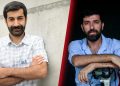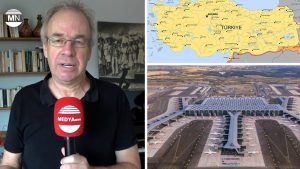
European national Chris Den Hond, a journalist reporting for Medya News and French media venture Orient XXI, has been denied entry to Turkey and handed a 10-year ban, in what he believes is retaliation for his coverage of the 10th anniversary of Kobani’s (Kobanê) liberation from ISIS earlier this year. The journalist, who had travelled to Turkey to report on Newroz celebrations in Istanbul and Diyarbakır (Amed), was stopped at Istanbul Airport on 16 March and informed that he was blacklisted from entering the country.
Den Hond first disclosed his deportation via a Facebook post, stating:
“My entry to Turkey is banned. I have just arrived in Istanbul, and I am banned for no reason. I am completely caught off guard.”
Following the post, Medya News contacted him via video call, where he detailed his experience at the airport and shared his concerns over press freedoms and Turkey’s political trajectory.
🔴#SHORTFILM | ‘Rojava Bombed But Still Standing’, a new short film by video journalist Chris Den Hond (@chris_hond). Watch here:#Rojava | #ShortFilm
🔗https://t.co/edLx9HNW8W pic.twitter.com/NFClijE9Fp— MedyaNews (@1MedyaNews) November 2, 2024
In May 2024, Chris Den Hond produced this short film about the Turkish attacks on NE Syria and the resilience of the people, entitled ‘Rojava bombed but still standing’.
According to Den Hond, upon arriving at passport control, Turkish police escorted him to another room, where they informed him that he was blacklisted, banned from Turkey for the next decade, and sent back to his residence in Paris.
Related Articles :
European delegations honour 10th anniversary of Kobani’s defeat of ISIS
Mazloum Abdi discusses Turkey’s aggression, US policy, and Syria’s future with international delegations
No official reason was given, but he strongly suspects it is linked to his participation in a delegation to Kobani in January, marking the 10th anniversary of the city’s liberation from Islamic State (ISIS).
“I am almost sure this has a link with the Kobanê delegation last January, when we celebrated the liberation of Kobanê from ISIS ten years ago. This was widely covered in the media, and I believe those who participated in the celebrations have been blacklisted.”
Den Hond described the ban as part of Turkey’s broader crackdown on journalists, opposition figures and civil society. He believes Turkey is increasingly panicked by the success of the model of democratic self-administration in North and East Syria, particularly in light of recent regional developments.
“Turkey is very scared—perhaps even in panic—over the success of the Rojava revolution and the democratic experience in North and East Syria.”
He also linked the situation to recent political events, mentioning the peace declaration by imprisoned Kurdish leader Abdullah Öcalan and Turkey’s continued repression of Kurdish political movements.
“The pressure is on the Turkish state. Turkey should stop its repression against journalists, against democratically elected mayors, against politicians, against writers. It should respond to Öcalan’s peace declaration, but instead, it continues to intensify repression.”
Den Hond, who has been covering Turkey and Turkish Kurdistan for nearly 30 years, noted that despite facing numerous arrests and restrictions in the past, he had never been denied entry before.
“I first came to Turkey in 1995 and have reported on many Newroz celebrations, HADEP’s first elected mayors and various political developments. It was never easy—many times I was arrested or prevented from working—but I was never banned. Now, Turkey is at a crossroads. If it wants to join the European Union, it must respect democratic norms and stop the repression.”
Den Hond has long been in solidarity with the Kurdish press, covering major political events in the region since 1995. He stressed that, more than his own ban, the broader issue is Turkey’s ongoing suppression of journalists, particularly those covering Kurdish issues.
“My case is just a small event. What is more concerning is the mass arrests of Turkish and Kurdish journalists today. They are sentenced, oppressed and prevented from doing their work. I stand in strong solidarity with my colleagues in Turkey and Turkish Kurdistan, who continue to do courageous journalism despite the risks.”
The incident adds to a growing pattern of international journalists facing entry bans or deportation from Turkey, amid continued state pressure on independent media and critics of government policies.