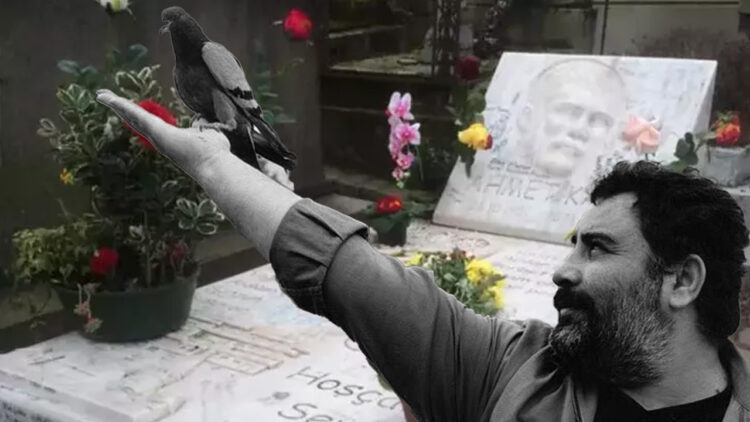
Ahmet Kaya’s family has condemned the deep-seated racism and ethnic intolerance faced by minorities as they begin restoring his desecrated grave in Paris. Kaya, a beloved Kurdish musician, was exiled to France in 1999 after announcing plans to release a Kurdish song, facing severe backlash and numerous lawsuits. He passed away in 2000, but his legacy continues to face hostility.
On 13 November 2021, three days before the 21st anniversary of Kaya’s death, Turkish racists vandalised his grave, damaging the relief of his face and writing “Türkiye” (Turkey) on his forehead. Melis Kaya shared her thoughts on social media, highlighting her father’s lifelong dedication to music and the diverse cultural landscape of Turkey. “The final injustice my father faced was having his grave desecrated for saying ‘I am Kurdish’,” she remarked.
Gülten Kaya, Kaya’s wife, announced the restoration efforts on social media, reflecting on the broader historical context of violence against minorities in Turkey. “This act of desecration is a reminder of the deep-seated hatred and violence that Kurds, Armenians and Jews have faced. We must not forget or allow this history of animosity to continue,” she stated.
The restoration announcement comes in the wake of recent nationalist gestures by Turkish footballer Merih Demiral during the 2024 UEFA European Championship, which reignited discussions about Turkish nationalism and racism.
The initial post by Gülten Kaya was misunderstood by many, who thought a new attack had occurred. “Our restoration efforts stem from the 2021 attack. We are grateful for the support and hope such acts of hatred will never happen again,” she clarified.