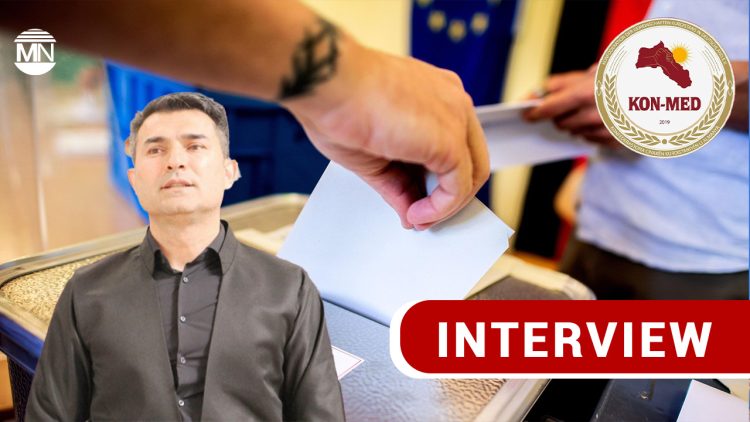
As Germany gears up for its federal elections on 23 February, Kurdish communities are calling for greater political inclusion and recognition. Kerem Gök, Co-Chair of KON-MED (Konföderation der Gemeinschaften Kurdistans in Deutschland), spoke to Medya News about the challenges Kurds face in Germany, including bans on Kurdish symbols, restrictions on political participation, and the need for dialogue with German authorities.
In this exclusive interview, Gök discusses:
✅ Why Kurds must be recognised as a political reality in Germany
✅ How restrictions on Kurdish movements affect democratic rights
✅ What KON-MED proposes to ensure greater inclusion in German society
Read the full interview below to understand the Kurdish community’s expectations and demands ahead of the elections:
Medya News: As Kurds living in Germany, what are the primary demands and expectations of the Kurdish community ahead of the upcoming elections?
Kerem Gök: As you know, there will be an election in Germany on 23 February 2025. We, as Kurds living here, as representatives of our institution, as individuals, and as a society, have been in this country for a long time. We have both our demands and our expectations.
First of all, Kurds are now a reality of this country. Kurdish children who were born and raised here are now integrated into the bureaucracy; we have Kurdish judges, prosecutors, and friends working in municipalities. Kurds are employed in different state institutions, and we have also established a strong economic presence. Kurds own properties, factories, and businesses. They pay taxes and contribute significantly to society.
Our primary demands centre around three main issues. First, we want recognition and support for Kurdish rights and identity. The current bans on Kurdish movements, cultural activities, and symbols seriously restrict our community. These restrictions are not just a problem for Kurds but also for our democratic allies in Germany.
Can you elaborate on how these restrictions impact the Kurdish community in Germany?
Certainly. Thousands of Kurds face difficulties due to these restrictive policies. People are penalised financially, their associations face pressure, and even basic activities like protests, festivals, and demonstrations are constrained. For instance, Kurdish cultural symbols and flags—such as those associated with Rojava, which played a vital role in the fight against ISIS—are banned here in Germany.
This ban affects our ability to freely express our identity and culture. Moreover, we have Kurds who have been arrested and face severe penalties simply for participating in democratic activities. These restrictions echo the repressive policies of the Turkish state, and they enable the continuation of anti-Kurdish sentiments and actions within Germany.
We believe that this situation not only harms the Kurdish community but also runs counter to the democratic values that Germany upholds.
What steps does KON-MED propose to address these challenges, and how do you envision moving forward?
Dialogue is key. We have been asking for constructive dialogue for a long time. If there are any shortcomings or misunderstandings, we are ready to address them through open discussions. Raiding Kurdish homes at 5 a.m., breaking down our doors, and targeting our institutions will not solve anything. Such actions benefit neither the German people nor the state.
Our hope is to foster better relations and mutual understanding. The Kurdish community has made significant contributions to Germany, and we believe that through dialogue and cooperation, we can build a more inclusive society. In the coming period, we will be more persistent in our efforts to develop dialogue and relations, which will lead to positive outcomes for both the Kurdish community and German society.