Serkan Demirel
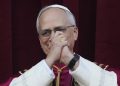
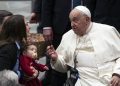
Pope Francis, the leader of the Catholic world, passed away at the Vatican on Monday, 21 April 2025, at the age of 88. The Catholic Church has seen many powerful leaders throughout history, but Pope Francis holds a special place as a reformer who captured the spirit of the 21st century and spoke to universal values. Starting his journey as a priest from Argentina, Pope Francis became a spiritual leader beloved by millions. So who was Pope Francis, and what made him different?
A symbol of humility and mercy
Born Jorge Mario Bergoglio in 1936 to a working-class Italian family in Buenos Aires, Pope Francis joined the Jesuits and studied for the priesthood. He made history when he was elected Pope on 13 March 2013, becoming the first non-European Pope in over 1,200 years.
Upon his election, he took the name of St Francis of Assisi, signalling that his papacy would be different. His choice of name was a clear declaration of his commitment to nature, the poor and peace – values central to St Francis of Assisi. His style of leadership, characterised by humility and mercy, reflected these principles.
Willing to address current issues
Once elected, Pope Francis didn’t hesitate to make bold changes to the traditional Catholic structure, emphasising openness, inclusiveness and transparency. His first act was a reform to increase financial transparency in the Vatican. He also opened discussions on the role of women in the Church and adopted an inclusive language towards people discriminated against because of their sexual orientation, declaring: ‘God loves them’.
This progressive stance drew strong criticism from conservative circles, but widespread support from those who saw it as part of the Church’s efforts to address contemporary and universal issues.
Standing up to sexual abuse
One of Pope Francis’ biggest challenges has been confronting the sexual abuse scandals that have persisted in the church for decades. In the early years of his pontificate, his response to some cases was seen as hesitant, but he gradually took more decisive and comprehensive steps.
The abuse scandal in Chile in 2018 marked a turning point in his approach. Initially, Pope Francis seemed to defend the accused, but after hearing the testimonies of the victims and the public outcry, he admitted his mistakes and apologised. This moment was seen as the beginning of Pope Francis’ more honest and direct approach to confronting the abuse crisis.
In 2019, Pope Francis organised a summit on the protection of children, bringing together bishops from around the world to emphasise the need for a systematic approach to combating abuse. At this summit, he issued the document ‘Vos Estis Lux Mundi’, which makes it mandatory to report cases of abuse.
Pope Francis allowed the investigation of past cases by opening some of the Church’s archives. He has also met personally with victims, apologised and emphasised that the Church should adopt the principles of “justice and mercy” rather than “silence and shame” in this matter.
During Pope Francis’ pontificate, many high-ranking clerics linked to sexual abuse crimes have been removed from office or defrocked. Cardinal Theodore McCarrick in the United States was the first to be stripped of his cardinal title for abuse crimes. The Pope has repeatedly underlined his determination on this issue, stating that “no abuse can be forgiven and no cover-up is acceptable”.
Pope Francis’ stance on the numerous cases of sexual abuse that have come to light in the Church, especially in recent years, has not shielded him from criticism. Some victims still say they have not received enough support. The slow implementation of reforms at the local level, especially in dioceses in Africa and Asia, shows that more effort is needed to fundamentally solve the problem. Pope Francis defines this crisis as a “process of healing the wounded soul of the Church”. While this is a difficult and painful process, it is the first time that a Pope has launched such an open, systematic and sincere fight against the sexual abuse crisis.
Visits to the Middle East
Pope Francis, who has also taken important steps for peace and interfaith dialogue in the Middle East, visited Palestine and Israel in 2014, visiting the holy sites of the three Abrahamic religions and calling for peace.
One of Pope Francis’ most notable visits was to Iraq in 2021. By visiting Iraq, Pope Francis became the first Pope to visit the country. His visit, following the devastation caused by ISIS in the region, made the trip even more significant. The historic meeting with Shia leader Ayatollah Ali al-Sistani marked a turning point in Muslim-Christian relations. He also visited war-torn areas such as Mosul, Erbil and the Nineveh Plain, offering support to Christian communities and emphasising a shared humanist message.
‘Laudato Si’
One of Pope Francis’ other major contemporary issues, which he has not shied away from addressing, unlike the Catholic world, is the climate crisis. His environmental manifesto, ‘Laudato Si’, published in 2015, made Pope Francis not only a religious leader, but also an environmental leader. In this document, he argued that the climate crisis was a moral responsibility. He highlighted the vulnerability of poor countries to climate change. He delivered strong messages on issues such as sustainable economies, living in harmony with nature and challenging the culture of consumption.
‘Refugees are not a burden, they are our brothers and sisters’
Pope Francis did not shy away from the fundamental concepts and issues of our time, such as migration, refugees and global justice, and received great support for his stance on migrants. Pope Francis criticised Europe’s policy of closing its doors to refugees and commemorated the refugees who lost their lives in the Mediterranean and on the migration routes. His visit to the Italian island of Lampedusa in 2013 was a symbolic step to draw attention to the plight of migrants. Saying “refugees are not a burden, they are our brothers”, he called for international solidarity.
During the COVID-19 pandemic, Pope Francis did not shy away from demonstrating his spiritual leadership and sending messages. The prayer ceremony he held alone in St Peter’s Square became a unique moment in human history. During this time, he praised health workers, called for equitable access to vaccines, and sent a message to world leaders that “no one should be left behind”.
Addressing the concerns of youth
Pope Francis also did not shy away from communicating with the most dynamic sectors of society and addressing their concerns. He saw young people not only as builders of the future, but also of today. The 2018 Synod on Youth and the subsequent document, Christus Vivit, were the product of his efforts to communicate directly with young people. Focusing on contemporary issues such as social media, unemployment, loneliness and digital culture, Pope Francis urged young people to “stand up, be brave and build”.
Continuing despite criticism
Pope Francis, who has at times faced serious criticism both inside and outside the Vatican for his reformist stance, has not abandoned his innovative approach despite the pressure on him. Traditionalist cardinals found some of his doctrinal shifts too radical, while political authorities distanced themselves by labelling his calls for global justice and ecological action as “political”. However, Pope Francis continued to defend the values he believed in and never abandoned dialogue.