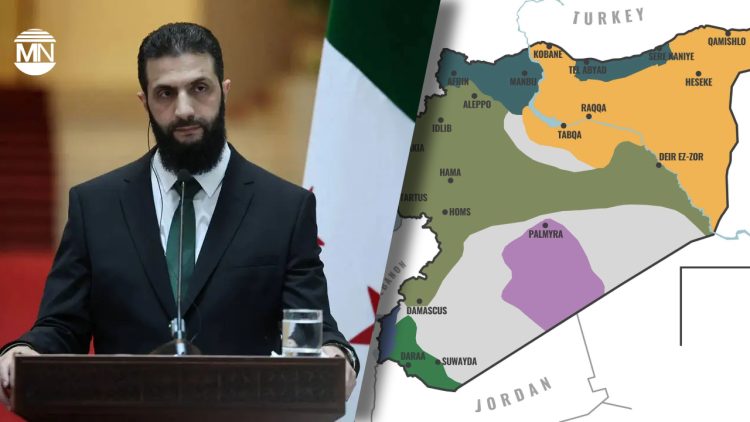
The International Crisis Group (ICG) released a report on 28 March outlining the dire situation facing Syria’s interim government, led by Hay’at Tahrir al-Sham (HTS), after Bashar al-Assad’s ousting in December 2024. Under interim president Ahmed al-Sharaa (al-Julani), the administration is confronting economic collapse, security crises and governance struggles, with the report warning of potential fragmentation without urgent reforms and external support.
“Syria’s new order is in a race against the clock. The interim government must strike a delicate balance in dealing with the myriad challenges it faces. Donors should give it the help it needs, lest this promising project of state building descend into a fiasco.”
In early March, clashes in Alawite regions like Latakia and Tartous saw massacres by loosely controlled forces kill hundreds, raising insurgency fears. “We inherited a skeleton of a country,” an official told the ICG, capturing the disorder. The report calls for accountability and reinstatement of vetted police, while noting ISIS persists in the east.
Economically, Syria grapples with a £157 billion rebuilding cost, worsened by US-led sanctions blocking aid. “Syria is rapidly running out of money,” the report states, with delayed salaries and over 850,000 displaced persons and 270,000 refugees straining resources. The European Union has relaxed some restrictions, but significant relief remains distant.
Al-Sharaa’s 13 March constitutional declaration concentrating power in the country, sparking concern. Meanwhile, a February national dialogue lacked broad representation, with an observer telling the ICG it was “controlling, not governing”. The report urges wider inclusion to restore confidence.
“The initial agreement between the interim government and the SDF provides an important building block for more detailed negotiations on how to peacefully integrate a region and leadership that have enjoyed autonomy from central government since 2012 into state institutions. Additionally, finding a compromise with the SDF could help the government boost energy supplies, potentially relieving the population of significant expenses (for power generators and gasoline smuggled at a high markup) and earning state revenue.”
The linchpin is the 10 March agreement with the Syrian Democratic Forces (SDF), which governs the oil-rich northeast. This deal seeks to integrate the SDF into state structures by the end of 2025, potentially halting clashes with the Turkish-backed Syrian National Army (SNA) and securing revenues. The ICG suggests Syria’s new administration’s fate hinges on this, as Kurds demand decentralised power—a move that could signal inclusivity and unlock Western aid. Yet, Damascus focuses on coastal unrest instead. “Time is not to our advantage,” a government official warned, noting the risk of delay amid multiple crises. Failure could escalate conflict, especially if the 2,000 US troops in Syria leave or Turkey intensifies pressure on the SDF.
Israel’s control of a buffer zone in the south and Russia’s ongoing military presence are exacerbating Syria’s already precarious transition, according to the report. The ICG calls on donor countries to set clear conditions for financial aid and curb foreign interference, warning that external actors continue to shape Syria’s trajectory. As the interim government struggles to maintain stability, the report underscores the urgent need for coordinated international action to prevent further destabilisation.