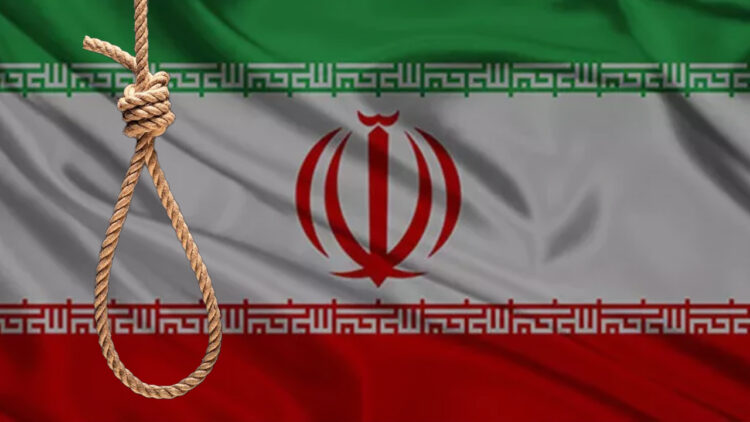
Human Rights Watch, in a statement issued on 11 November, strongly condemned the Islamic Republic of Iran’s increasing reliance on executions as a mechanism to intimidate and suppress dissent.
The organisation noted that ethnic minorities, political activists, and foreign nationals are disproportionately targeted, often facing “gross violations of procedural laws”. Human Rights Watch further accused the regime of leveraging the death penalty to instil a pervasive atmosphere of fear throughout the country.
The statement cited the case of Warisheh Moradi, a Kurdish political prisoner and a member of the Eastern Kurdistan Free Women’s Society (KJAR), who was sentenced to death by Judge Salvati in Branch 15 of Tehran’s Revolutionary Court.
Additional concerns were raised about the Urmia Revolutionary Court, which recently sentenced five Kurdish men to death on charges of spying for Israel.
Human Rights Watch referenced reports from the Kurdistan Human Rights Organisation, detailing the convictions of Naser Bakrzadeh from Urmia, Idris Ali and Azadi Shojaei from West Azerbaijan’s Sardasht, Shahin Wasaf from Salmas, and Rasul Ahmad Rasul, a resident of the Kurdistan Region of Iraq.
The organisation also highlighted the death sentences handed down to six young individuals from Tehran’s Ekbatan neighbourhood. This, it argued, reflects the regime’s systematic strategy to perpetuate fear among its population. Furthermore, the execution of Afghan nationals in Iran has become alarmingly frequent, with at least 49 Afghan citizens executed this year alone.
Recent executions underscore the severity of the situation. Over the past four days, Rahim Faqiri from Selmas, West Azerbaijan Province, and Amanj Azizi, a Kurdish youth from Sardasht, Iranian Kurdistan (Rojhilat), were executed in Birjand and Urmia prisons, respectively. Reports from Persian-language media reveal that since October, Iran has carried out 166 executions, including those of 12 Afghan nationals and one individual holding dual citizenship.
Nahid Naqshbandi, an Iran researcher at Human Rights Watch, emphasised that the death penalty is weaponised as “a tool of fear”, particularly against ethnic minorities and political dissidents subjected to deeply flawed trials. She noted, “This brutal tactic seeks to suppress dissent and fortify the regime’s autocratic grip through sheer intimidation.”
The Iran Human Rights Organisation has echoed these concerns, warning that the Islamic Republic, currently navigating one of the most precarious periods in its history, is relying on repression and mass executions to maintain its rule. The organisation’s director, Mahmoud Amiri Moghadam, stressed the importance of raising the political cost of such practices through sustained public protests, robust civil society campaigns, and decisive international pressure. “Every execution demands a proportionate response to avert further atrocities,” he remarked.
UN Special Rapporteur on human rights in Iran, Mai Sato, also expressed alarm over the rising execution rate, observing a marked increase in the past few months.