On 17 May, Paris’s 10th Arrondissement, often called “Little Kurdistan”, came alive with the sights and sounds of the 4th Kurdish Culture Festival, a week-long celebration of Kurdish heritage that throws a light on the resilience of the Kurdish diaspora. Organised by the Democratic Kurdish Community Federation in France (FCDK-BF), and running until 23 May, the event features traditional dances, music, cuisine and exhibitions, drawing hundreds to honour a culture that has faced decades of suppression in Turkey, Iraq, Iran and Syria.
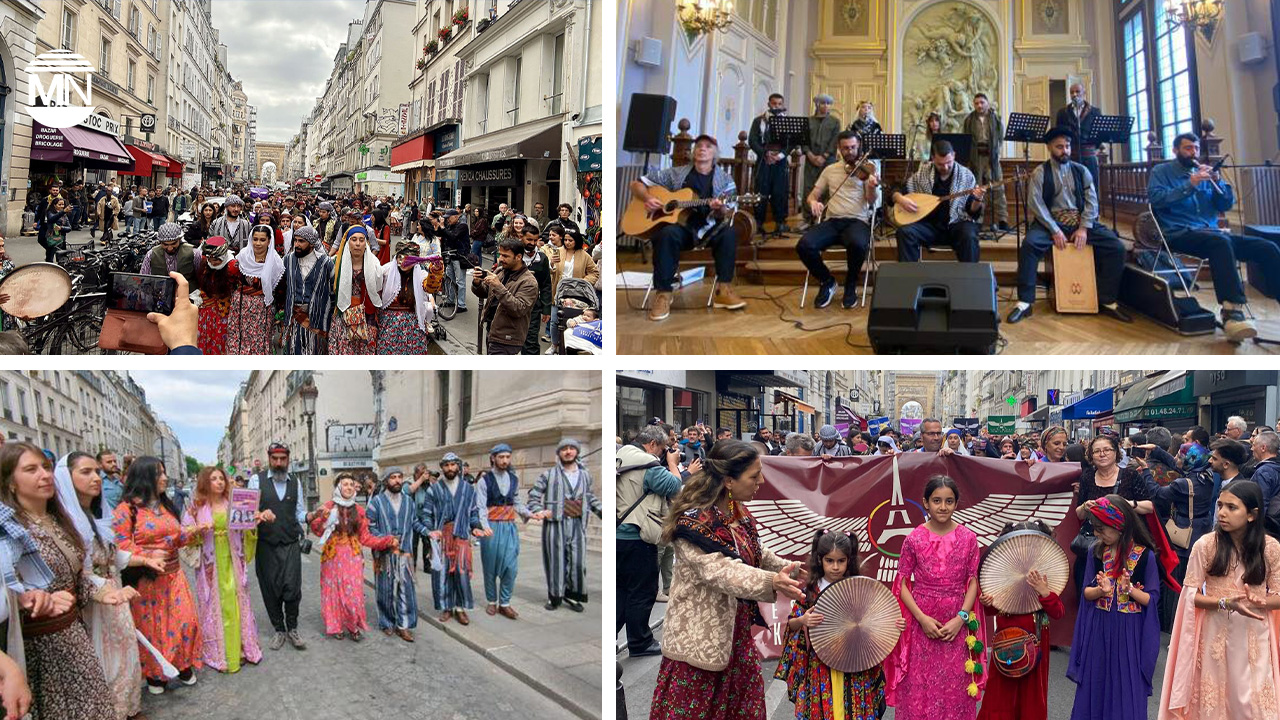
The festival began with a vibrant parade from the Ahmet Kaya Kurdish Cultural Centre, named after the iconic Kurdish musician, to the district’s town hall. Participants, adorned in colourful traditional costume, danced the govend, a Kurdish folk dance, to the rhythm of the drum, zurna (a double-reed woodwind instrument) and erbane (a large, flat drum very like the Celtic bodhran), filling the streets with energy. Azad Doğan, co-chair of the FCDK-BF, opened the event with a call to preserve Kurdish identity. “Every tree grows from its own roots,” he said, highlighting the festival’s mission to resist cultural erasure.
This celebration is more than a cultural showcase; it is a defiant stand against historical attempts to suppress Kurdish language, music and traditions. Kurds, an ethnic group of about 30 million spread primarily across Turkey, Iraq, Iran and Syria, have long faced policies aimed at assimilating their identity, such as bans on speaking Kurdish in public or, in some regions, even performing traditional songs. In Paris, home to a significant Kurdish diaspora, the festival fosters pride and solidarity, inviting both Kurds and non-Kurds to engage with their rich heritage.
The event’s political undertones were evident when Alexandra Cordebard, mayor of the 10th Arrondissement, addressed the crowd. “We are proud to host this event in our borough, known as Little Kurdistan,” she said, adding support for Kurdish leader Abdullah Öcalan’s efforts toward democratisation and peace.
On 18 May, the festival resumed at Café A, where a well-known chef presented reimagined Kurdish dishes during a brunch accompanied by Dengbêj (bards who preserve Kurdish history through song) performances. An exhibition on the Kurdish language, showcasing dialects like Kurmanji, Sorani and Zazaki, opened and will remain on display until early June. The festival also includes workshops on kilim (Kurdish rugs) and kofî (traditional women’s headwear) crafting, as well as children’s storytelling sessions, encouraging younger generations to connect with their roots.
The festival extends beyond Paris to Montreuil, where a musical evening featuring Kurdish artists is planned, though on which day remains unspecified. The exhibitions and workshops are continuing today, 19 May, with the festival set to conclude on Friday with a concert by Mà Music, a dynamic group from Diyarbakır (Amed), known for its vibrant performances rooted in Kurdish musical traditions.
This is the fourth iteration of the festival, which began in 2022 and has grown each year. Previous festivals featured theatre performances and exhibitions like the “Jin, Jiyan, Azadi” (Woman, Life, Freedom) exhibition, focusing on Kurdish women’s struggles. Despite challenges, including a 2023 attack on the Ahmet Kaya Centre that killed three Kurds, the festival remains a beacon of resilience.
The 4th Kurdish Culture Festival not only celebrates a vibrant heritage but also reaffirms the commitment of the diaspora to preserving their identity in the face of historical adversity, making it a significant cultural moment in Paris.