

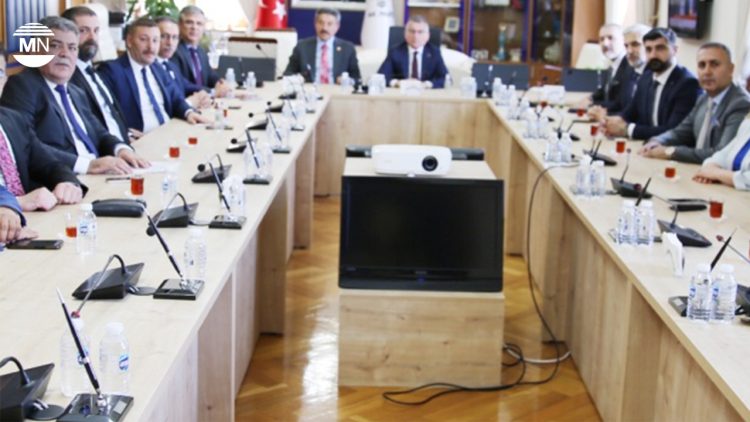
Sixteen bar associations from Turkey’s Kurdish-majority eastern and south-eastern provinces submitted a detailed roadmap to parliament, urging the government to adopt a 17-point programme aimed at initiating a transition to democracy and achieving lasting peace.
This week, the presidents of the sixteen bar associations visited the political parties represented in Parliament and met with the Speaker of the Turkish Grand National Assembly (TBMM), Numan Kurtulmuş, to present a draft proposal for the democratic resolution of the Kurdish question. The draft proposal calls for the expansion of legal and democratic spaces, the recognition of Kurdish language and cultural rights, and an end to centralised state tutelage over local administrations.
The proposal outlines 17 specific demands that the bar associations consider fundamental to launching a democratic transition in Turkey, emphasising the need for legal reform, the protection of minority rights and the reinforcement of democratic governance:
Founding role of the TBMM: As the highest organ directly representing the people, the Grand National Assembly of Turkey bears a historical and constitutional responsibility to ensure the legitimacy, broad social engagement and institutionalisation of the peace process. For this reason, the Assembly must take on an active and founding role in leading the process’s implementation.
Fundamental rights and freedoms: The freedoms of thought, expression, and organisation are cornerstones of a democratic society and must be guaranteed and exercised without facing pressure or punitive measures. Ensuring these rights is vital for building lasting social peace.
Equal citizenship: The principle that all citizens should enjoy equal rights and responsibilities, regardless of ethnicity, language, culture, or belief, must be enshrined in the constitution and legislation. Practices that undermine this principle must end, and legal reforms should be enacted to reinforce it.
Right to political participation: Political participation is the foundation of democratic legitimacy. Accordingly, individuals and institutions representing the popular will must be protected from repression, intimidation, judicial harassment and threats of punishment when engaging in political activity.
Prison reform: The conditions under which sentences are carried out must be revised to respect human dignity, particularly with regard to ensuring the health and life rights of seriously ill prisoners. The Law on the Execution of Sentences should establish a permanent legal framework based on the principles of equality and justice.
Trustee appointments: Appointing state trustees instead of elected local officials disregards the right to vote and the will of the people, violating fundamental democratic principles. This practice must be ended immediately, and the legal regulations that permit it should be repealed.
International and judicial obligations: Turkey must comply fully with the binding rulings of the European Court of Human Rights (ECHR) in accordance with its obligations under the European Convention on Human Rights and must abandon the entrenched practice of non-compliance. Likewise, Turkey must respect and implement the rulings of the Constitutional Court, which serves as the final authority in interpreting constitutional provisions.
Judicial independence: The judiciary must be independent and free from political interference. In particular, the arbitrary use of detention and arrest measures in politically motivated cases must cease, and the right to a fair trial must be fully safeguarded.
Administrative bans: Arbitrary administrative decisions and practices that restrict the right to peaceful demonstration, assembly and organisation, including those inherited from the emergency rule era, must be abolished. Provisions in the Special Provincial Administration Law and similar regulations that restrict fundamental freedoms must be repealed.
Disarmament and reintegration: A legal framework should be established to facilitate the peaceful reintegration of former members of armed groups into society, provided they have renounced violence. Regulatory and protective measures should be implemented to facilitate their social reintegration.
Truth and Reconciliation Commission: An independent and effective Truth and Reconciliation Commission should be set up to investigate past human rights violations, recognise the trauma experienced by victims and help repair collective memory.
Shared historical memory: The shared suffering experienced by the Turkish and Kurdish peoples in the past must be acknowledged fairly and humanely. Remembering these experiences should strengthen collective memory and lay the groundwork for a shared future.
Local governance reform: To expand participatory democracy, the authority of local administrations should be increased and the principle of decentralised governance reinforced. Centralised state tutelage must be abolished to enable direct public participation in local government.
Language and cultural rights: Constitutional guarantees must be extended to protect the cultural expression of all ethnic identities, most notably the Kurdish language. Barriers to accessing education in one’s mother tongue and public services must be removed.
Security policies: Security strategies must align with the principles of a democratic, law-abiding state, and practices that criminalise society must be abolished. The concept of security should be redefined to prioritise human security.
Socioeconomic policies: Building and sustaining peace requires political, social and economic equality. Long-term, inclusive, egalitarian policies must be implemented to eradicate regional poverty and improve access to employment and educational opportunities.
New constitution process: Following the implementation of the aforementioned reforms, a democratic, libertarian and pluralistic constitutional process should be launched, incorporating all segments of society. The new constitution must serve as a social contract that recognises and embraces diversity.
In an interview with Mezopotamya Agency, Kadir Karaçelik, president of the Muş Bar Association, stated that the initiative originated from a collaborative effort among the bar associations to determine how they could contribute to ensuring that this emerging process evolves into lasting societal peace. “We transformed our internal collective discussions into a written document,” Karaçelik said, describing the bar associations as legal institutions that have long witnessed the region’s challenges and engaged in combatting human rights violations, especially in the fields of justice and law, while consistently advocating for restorative justice.
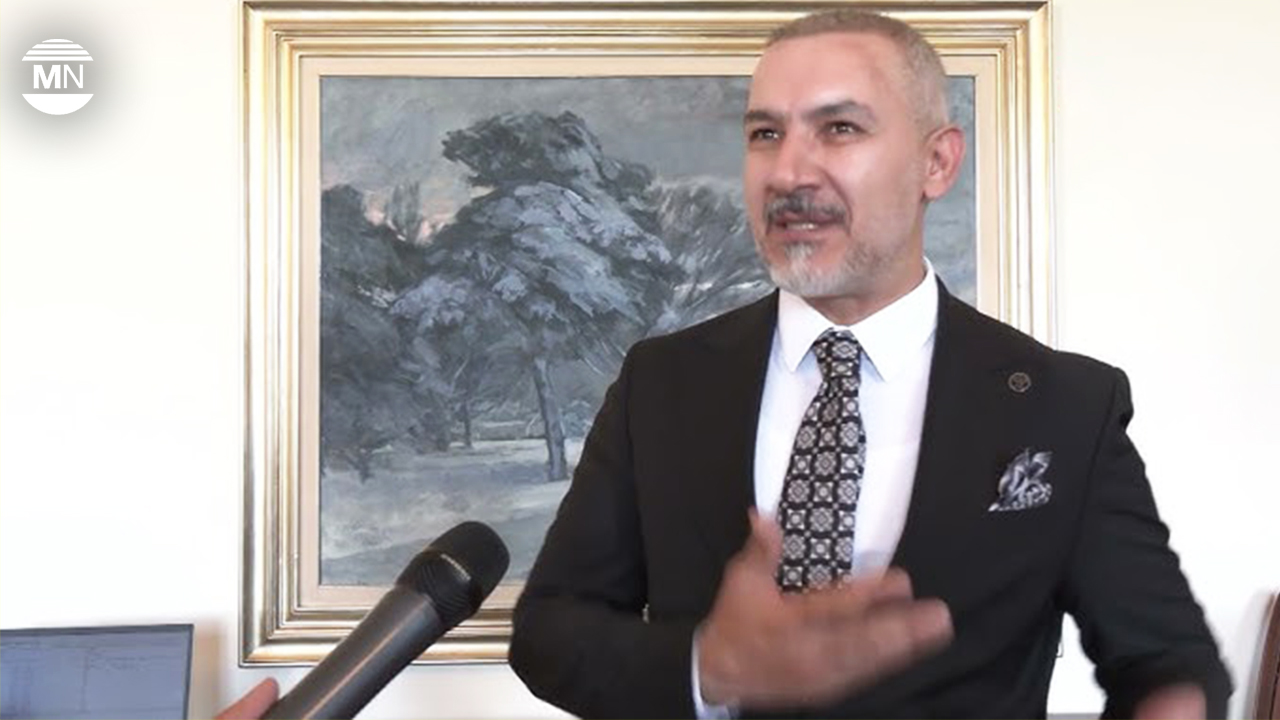
Underlining the vital importance of peace for Turkey and the wider region, Karaçelik continued: “In addressing how we can help transform the issue of peace into a lasting social consensus, we tried to express our vision of the legal, social and societal requirements. We shared our written summary with political parties. We emphasised that this issue must be approached above party politics, with the understanding that societal peace should take precedence over political desires, interests and baggage.”
Karaçelik emphasised the need for strong political support and civil engagement, adding that civil society organisations such as bar associations can provide societal and psychological support. “Processes with clear steps like this naturally require patience. But negative peace — meaning the cessation of direct violence — has largely been achieved. What remains is to cultivate positive peace. We have tried to articulate our assessments and recommendations to help move this phase forward into something more concrete.”
Referring to the 17-point framework they submitted, Karaçelik said: “Our proposal was made up of 17 points. We emphasised Parliament’s founding role and societal legitimacy in particular. Taking these into account, we conveyed that Parliament has a great responsibility. As legal organisations, if there is a role for us to play, we are ready and willing to commit to it wholeheartedly.”
While the government has yet to respond formally, the proposal represents a comprehensive legal and political initiative, rooted in the collaborative efforts of bar associations operating in Turkey’s predominantly Kurdish provinces. Built on years of experience in defending human rights and promoting restorative justice, the initiative highlights the urgent need for structural democratic change to achieve lasting and meaningful peace in Turkey.
Related Article:
Kurdish Bar associations in Turkey call for democratic reforms and justice after PKK disarmament


