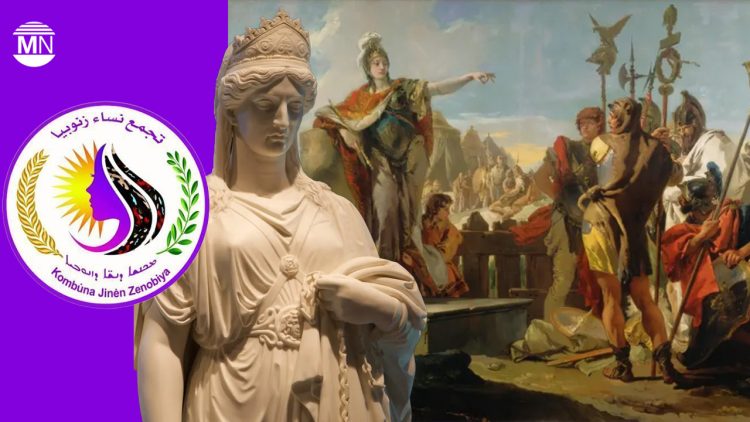
The decision by Syria’s new rulers, who have taken control of significant parts of the country after years of conflict, to remove Queen Zenobia’s name from the country’s national curriculum has sparked widespread criticism, highlighting the enduring power of the queen’s legacy and its perceived threat to oppressive ideologies. Despite the pressing challenges in Syria, such as devastated infrastructure, political instability and social fragmentation, the interim government has prioritised this controversial move, raising questions about its motives.
Queen Zenobia, the third-century ruler of the Palmyrene Empire, is hailed as a symbol of strength, leadership and resistance. She led her empire to challenge Roman authority, creating one of the most powerful breakaway states of her time. Her achievements, particularly in a male-dominated era, have made her a revered figure not only in Syrian history but also in the wider Middle East. Palmyra, her capital, stood as a beacon of cultural and economic prosperity before its destruction by ISIS.
The removal of Zenobia’s name coincides with other regressive measures, including calls to make the wearing of the hijab mandatory. Recent reports highlighted groups roaming through Syrian neighbourhoods, broadcasting calls for women to wear the hijab and distributing religious materials, further increasing concerns about restrictions on women’s freedoms and societal roles.
The Zenobia Women’s Gathering, named in her honour, condemned the move, stating: “We strongly protest the curriculum changes that erase the names and roles of leading Syrian women like Queen Zenobia. This is not merely about forgetting names but about losing Syrian history and identity. Women have always played a crucial role in the building of civilisations, and no force can deny their presence or contributions. Zenobia stands for everything they fear: strength, independence, and a historical role for women in shaping society.”
This controversy unfolds against the backdrop of escalating tensions in Syria. The region of Palmyra, historically Zenobia’s stronghold, was devastated by ISIS, who destroyed many of its historic buildings as part of their campaign to erase cultural heritage. Now, the removal of her name is seen as part of a similar effort to rewrite history and marginalise women’s contributions to it.
The Zenobia Women’s Gathering, active in addressing women’s issues and preserving cultural memory, has also faced immense challenges. Recently, three of its members—Qamar al-Sud, Aisha Abdul Qader and a woman known only as Iman were killed in Turkish-led attacks on the town of Manbij. Their martyrdom highlights the sacrifices women continue to make in the region, both for their rights and for the preservation of their legacy.
This struggle to keep Zenobia’s name alive in educational materials has become symbolic of a larger fight for women’s recognition in Syrian society. As the changes in the national curriculum draw global attention, calls for solidarity with Syrian women grow louder, urging action to safeguard their rights and history.
The Zenobia Women’s Gathering has made a clear call to action: “We must stand together to protect our culture and identity against these destructive attacks. Women’s roles and histories are not just a part of the past, they are the foundation of a just and equal future for Syria.”
Queen Zenobia’s legacy continues to inspire, even as efforts to erase her name only go to highlight the power she still holds in the collective memory of a nation.