Amid escalating tensions across the Middle East, the Kurdistan National Congress (KNK) has called on all political forces in Eastern Kurdistan (Iranian Kurdistan region also known as Rojhilat) to urgently unite and establish a joint platform to defend the region’s interests and pursue peace.
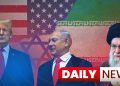
In a statement issued on Monday, the KNK warned that the ongoing war between Israel and Iran — now also involving the United States — has transformed from a bilateral conflict into a broader regional and international crisis, with direct consequences for Kurdish populations in Iran. “This war was not started by us, but we are caught in the middle,” the statement said.
The KNK, a pan-Kurdish umbrella body headquartered in Europe that advocates for greater cooperation between Kurdish movements in Turkey, Iraq, Syria and Iran, noted that military targets in Eastern Kurdistan are increasingly under attack, while the region’s airspace is being used by warplanes and missiles. “Although we are not a party to this war, it has serious impacts on our people and our land,” the group stated.
Highlighting the strategic significance of the moment, the statement underlined the necessity of building Kurdish national unity. “This war has the potential to reshape the entire region. The post-Sykes-Picot and -Lausanne order is beginning to collapse. Are we, as the Kurdish people, ready for this change?” the organisation asked, stressing the “vital” nature of unity in the face of shifting regional dynamics.
To this end, the KNK announced that it is actively working to build a joint platform among political parties and civil institutions in Eastern Kurdistan. The group pledged to intensify efforts in the coming days, including visiting organisations on the ground and establishing mechanisms for coordination.
“We call on all political parties, institutions and structures in Rojhilat to support our efforts and come together as soon as possible to develop a common strategy,” the KNK said.
The organisation also issued a broader call to Iran, Israel and the United States, urging them to halt hostilities immediately and seek peaceful, negotiated solutions: “We call for dialogue and peace. The war must end before it consumes more lives and increases the suffering of peoples in the region.”