Despite mounting reports confirming Russia’s firm grip on the Kursk region, diplomatic efforts have taken a significant turn. The Guardian newspaper reported that Ukraine has agreed to a US-proposed 30-day ceasefire—a move that signals Kyiv’s readiness to pursue de-escalation even as Russian hostilities persist.
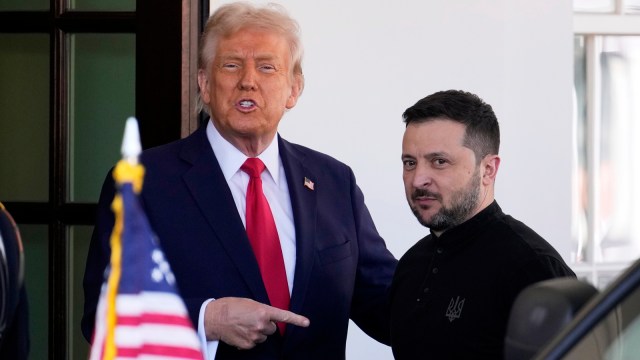
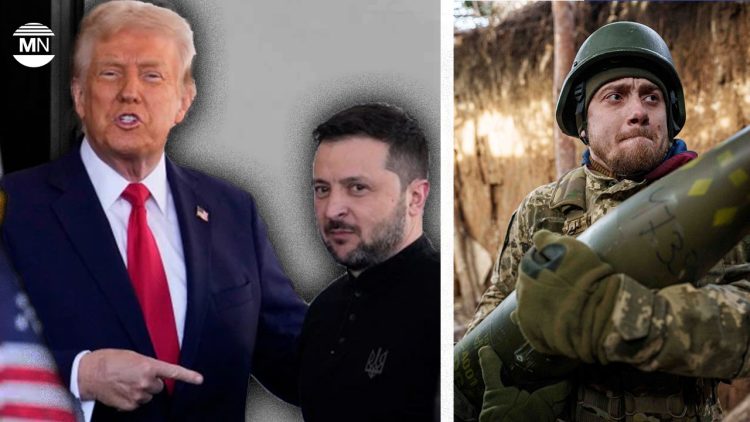
Following high-stakes negotiations in Saudi Arabia, US and Ukrainian officials announced a breakthrough ceasefire agreement in Jeddah. The deal, unveiled in a joint statement, comes in the wake of a tense Oval Office standoff between Donald Trump and Ukrainian President Volodymyr Zelensky—an exchange that temporarily halted US military aid, drawing sharp criticism from European allies.

Kyiv’s agreement to an immediate 30-day ceasefire has been met with Washington’s full restoration of military aid and intelligence sharing, signalled a pivotal shift in US-Ukraine relations. This support has come at the expense of a promise that the US will gain significant control over Ukraine’s state owned mineral deposits, and benefit from Ukraine’s oil and gas revenues.
Expressing optimism that Vladimir Putin would reciprocate, Donald Trump framed the deal as a potential turning point. “This is a total ceasefire,” he told reporters outside the White House. “Ukraine is on board, and we hope Russia will follow suit.”
In parallel, Rubio expressed cautious optimism about Russia’s response: “If Russia agrees, progress will be clear; if not, it will be evident who is blocking peace,” he said. Rubio emphasised that military solutions are unattainable, and a diplomatic resolution is the only path forward to ensure Ukraine’s long-term security.
“The United States will emphasise to Russia that mutual cooperation is essential for achieving lasting peace,” stated a joint US-Ukraine declaration.
With Kyiv’s commitment to the ceasefire, the spotlight now shifts to Putin, who faces a critical decision: agree to a temporary ceasefire or risk further straining relations with Washington under the new Trump administration.
International reactions
In London, Prime Minister Keir Starmer hailed the ceasefire as a “pivotal moment for peace in Ukraine,” urging intensified diplomatic efforts to achieve a sustainable resolution. He revealed plans to convene global leaders this Saturday to chart the path forward.
French President Emmanuel Macron welcomed the progress achieved during the Jeddah talks, stating:
French President Emmanuel Macron welcomed the progress achieved during the Jeddah talks, stating:
“I welcome the progress made during the discussions between the United States of America and Ukraine held today in Jeddah, particularly regarding the idea of a possible 30-day ceasefire”.
Macron’s remarks underscore France’s support for the diplomatic efforts aimed at de-escalating the conflict while emphasizing the importance of security assurances for Kyiv.
Meanwhile, in Warsaw, Polish Prime Minister Donald Tusk praised the U.S.-Ukraine initiative, he wrote on social media platform X on Tuesday:
“It seems like the Americans and Ukrainians have taken an important step towards peace… And Europe stands ready to help reach a just and lasting peace.”
Tusk’s statement underscores Europe’s commitment to supporting efforts aimed at achieving a fair and enduring resolution to the conflict.
Moscow’s reaction
Russian President Vladimir Putin is expected to address the possibility of a ceasefire in Ukraine on Thursday 13 March, according to the state-run TASS news agency.
Kremlin spokesman Dmitry Peskov confirmed that Putin will take questions from journalists during a joint appearance with Belarusian President Alexander Lukashenko, who is on an official visit to Russia. When asked whether Putin would discuss matters beyond Belarus-Russia relations, Peskov replied, ‘It all depends on the questions asked by the journalists.
The US ceasefire proposal marks a pivotal moment in the Russia-Ukraine war, aiming to ease humanitarian suffering and gauge Moscow’s commitment to de-escalation. However, it risks legitimising Russia’s territorial gains without strong oversight. Moscow’s demand for Ukrainian neutrality clashes with Kyiv’s focus on sovereignty, highlighting the tension between short-term conflict management and long-term peace.