

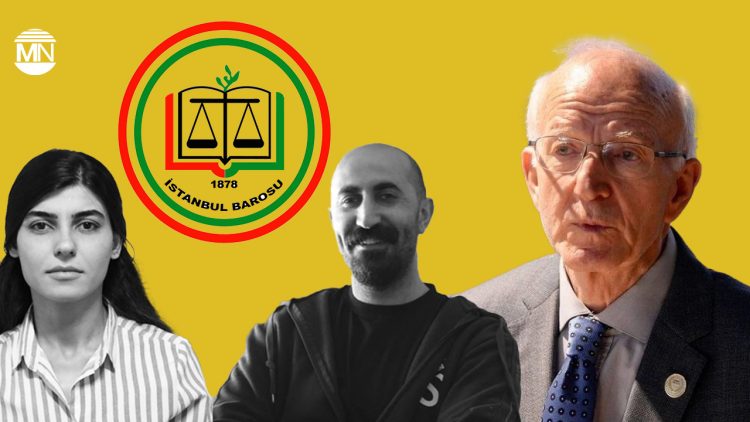
The Istanbul 2nd Civil Court of First Instance has ruled to dismiss the entire executive board of the Istanbul Bar Association, one of the largest legal bodies in the world, and called for new elections. The ruling, which was not read aloud in court but instead appeared in Turkey’s official judicial informatics system (UYAP), comes amid intensifying political turmoil following the detention of Istanbul Mayor Ekrem Imamoglu.
Bar Association President Prof. İbrahim Kaboğlu and his colleagues learned of the decision through UYAP and have announced their intention to appeal. The existing leadership will continue in office until the decision is finalised, as the court did not impose an interim injunction.
Prof. Kaboğlu is widely regarded as one of Turkey’s most respected democratic intellectuals and legal scholars. His removal marks an extraordinary moment in Turkish legal and political life. The Istanbul Bar Association, which represents tens of thousands of lawyers, has historically played a prominent role in defending the rule of law, human rights, and democratic values.
The case was initiated by the Istanbul Chief Public Prosecutor’s Office following a statement issued by the Bar Association in January, which condemned a Turkish drone strike that killed two Kurdish journalists, Nazım Daştan and Cihan Bilgin, near the Tishreen (Tişrîn) Dam in North and East Syria. The Bar described the incident as a potential war crime, triggering an official investigation.
The prosecution accused the Bar of “terrorist propaganda” and “public dissemination of misleading information”. While it alleged that the two slain journalists were affiliated with a terrorist organisation, no conclusive judicial ruling confirmed this claim. The prosecutors cited ongoing investigations into the journalists by different provincial prosecutor’s offices, but the lack of court convictions did not deter the case from moving forward.
Related Articles:
Istanbul bar executives investigated after condemning Kurdish journalist killings in northern SyriaJournalists’ killings add to Turkey’s war crimes record
The prosecution also sought the removal of Kaboğlu and the entire board under Article 77 of Turkey’s Attorneyship Law, which allows for the dismissal of elected bar executives under exceptional circumstances. Legal experts note that such dismissals are rare and politically sensitive.
One of the board members, Fırat Epözdemir—a Kurdish lawyer and human rights advocate—was arrested in connection with the same investigation approximately one month ago. His detention was widely criticised by legal rights groups.
During the hearing, Kaboğlu stated that none of his procedural questions were answered.
“We embraced the law, while they accelerated their assault on it. We witnessed the collapse of justice inside the Palace of Justice,” he said, before he and colleagues left the courtroom in protest.
Later, in a detailed statement following the ruling, Kaboğlu added:
“For five months, we have worked tirelessly in defence of the rule of law. We learned one night in January that the Istanbul Chief Prosecutor had initiated an operation against us, and from that point onward, we were confronted with unlawful and irregular actions. Despite this, we consistently sought to bring the process back within the framework of legality.”
He continued: “We did not protest the judiciary. On 7 January, we submitted our statements, and even as the process unfolded through extrajudicial means, we did not yield. Today, we are stronger. With over 200,000 lawyers across Turkey, they will not succeed in silencing the legal profession. Justice may have collapsed today inside the courthouse, but our resolve has only grown stronger.”
Kaboğlu has visited detained Mayor İmamoğlu and reported that the mayor “feels stronger than ever”.
The Istanbul Bar Association is one of the largest and most influential legal institutions globally, representing over 50,000 lawyers. The National Judiciary Informatics System (UYAP) is Turkey’s official digital platform for legal proceedings. Article 77 of Turkey’s Attorneyship Law outlines procedures for the formation and dissolution of bar associations and their governing bodies. Recent years have seen growing international concern over the erosion of judicial independence and freedom of expression in Turkey, particularly with regard to politically motivated prosecutions.


