

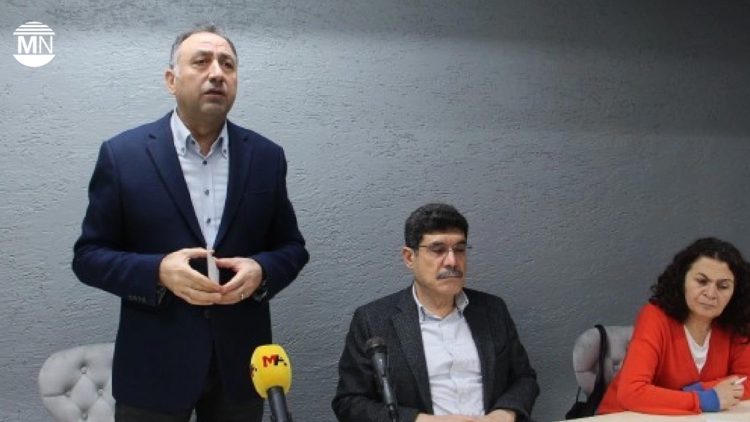
In a recent public meeting in İstanbul on Saturday, Ali Kenanoğlu, a spokesperson for Turkey’s Peoples’ Democratic Congress (HDK), called for the release of Abdullah Öcalan, the imprisoned leader of the Kurdistan Workers’ Party (PKK), to facilitate a healthy resolution of the Kurdish question in Turkey. Kenanoğlu stressed that Öcalan’s active participation is crucial for effective peace negotiations.
The HDK is a coalition of progressive movements, political parties and civil society organisations advocating for democracy, equality and minority rights in Turkey. Established in 2011, it aims to create a pluralistic and inclusive political platform.
Addressing participants at the event, “Peace and Dialogue as the Key to Coexistence”, held at the premises of the Confederation of Eastern and Southeastern Associations in Istanbul’s Şirinevler, Kenanoğlu stated, “We say: ‘Then create the opportunities for Mr Öcalan, get him off that island, let him come and be in a position to conduct this process in a healthier manner. Release him.'”
The statement follows a recent meeting between Öcalan and the pro-Kurdish Peoples’ Equality and Democracy Party (DEM), during which Öcalan expressed his readiness to support a new peace initiative proposed by Turkish President Recep Tayyip Erdoğan and his ally the far-right Nationalist Movement Party (MHP) leader Devlet Bahçeli. Öcalan’s willingness to contribute to peace efforts has been seen as a significant development in addressing the decades-long conflict between the Turkish state and Kurdish militants.
Related articles:
Öcalan’s message trends in Turkey: A path towards Kurdish-Turkish reconciliation
Abdullah Öcalan: A catalyst for peace and democracy in Turkey and the larger region
Kenanoğlu linked the potential resumption of peace talks to recent developments in Syria, highlighting the interconnectedness of regional dynamics and domestic policy. He noted that the situation in Syria, particularly concerning Kurdish groups, has implications for Turkey’s approach to the Kurdish question.
The spokesperson also outlined the organisation’s commitment to promoting peace through societal engagement. He announced plans for an international peace conference scheduled for February and the initiation of a signature campaign aimed at raising awareness about the detrimental effects of war and the importance of peace. Kenanoğlu encouraged civil society organisations to arrange panels and discussions to further the cause, saying, “As HDK, we are ready to provide you with all kinds of support.”
The call for Öcalan’s release and the emphasis on inclusive dialogue reflect a broader push within Turkish society to address the Kurdish question through democratic means. Kenanoğlu’s remarks reinforce the belief that Öcalan’s involvement could be instrumental in achieving a lasting peace, given his influence and leadership within the Kurdish movement.
As Turkey navigates complex regional and domestic challenges, the HDK’s advocacy for Öcalan’s release adds to the ongoing discourse on how to effectively and peacefully resolve the Kurdish question, which has been a persistent and contentious aspect of Turkish politics for decades.


