

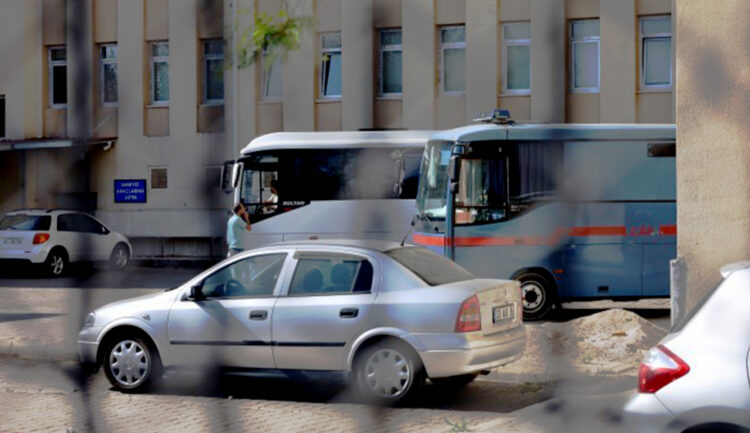
The Turkish Minister of Interior reported on 15 October that 269 individuals were detained in police raids across 36 cities in Turkey. These mass arrests followed the “Azadi” (Freedom) rally, organised in Kurdish majority city Diyarbakır (Amed) two days prior by the Platform of Democratic Associations (Platforma Saziyên Demokratîk).
The rally, held on 13 October, attracted hundreds despite a prior ban from authorities, with participants coming from across Kurdish-majority regions of Turkey. Demonstrators called for the freedom of Abdullah Öcalan, leader of the Kurdistan Workers’ Party (PKK), emphasising his crucial role in Turkey’s democratisation and the resolution of the Kurdish issue. Those unable to attend the central gathering in Diyarbakır took to the streets in other cities, chanting slogans and dancing in solidarity.
The large turnout at the rally signals a growing demand for a peaceful resolution to the Kurdish question. Although some viewed a recent handshake between Devlet Bahçeli, leader of the ruling coalition partner Nationalist Movement Party (MHP), and members of the Peoples’ Equality and Democracy (DEM) Party as a positive development, many Kurdish politicians remain cautious. Veteran Kurdish politician Ahmet Türk remarked, “We should neither underestimate nor overstate these gestures.”
The extensive police raids are seen as a clear indication that the Turkish government opts for repression over dialogue in addressing Kurdish concerns.


