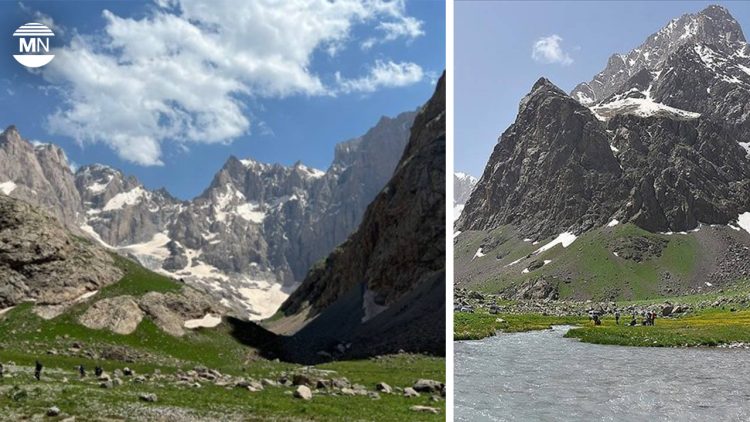
Glaciers on Turkey’s Cilo Mountain, among the last remaining Ice Age remnants in the Middle East, are facing extinction within two decades due to rising global temperatures and uncontrolled tourism, environmental observers have warned, Mezopotamya Agency reported on Wednesday.
Located at 3,500 metres above sea level in the Heaven-Hell Valley (Spîxanê)—in the Yüksekova (Gever) district of Turkey’s southeastern Hakkari (Colemêrg) province, the Cilo Glaciers date back more than 20,000 years. They lie at the foot of Turkey’s second-highest mountain, Cilo Mountain, which reaches 4,135 metres.
Experts say global warming, combined with waste left by a growing number of visitors, is accelerating the melting process. The area has become a popular destination due to its scenic valleys, year-round climatic diversity, and opportunities for mountaineering, cycling, and trekking.
However, the absence of regulation has resulted in pollution, including litter, food waste, plastic bags, ash and other residue from open fires. These contribute not only to environmental degradation but also directly damage the fragile ice formations.
While the melting of glaciers in the Himalayas and polar regions is widely documented, the Cilo Glaciers — often overlooked — represent a similarly urgent case in the Middle East. Researchers have noted that without immediate protective measures and visitor controls, the glaciers may completely vanish within 20 years.
Once considered “Kurdistan’s hidden paradise” for their untouched beauty, the Cilo Glaciers are now facing twin threats: the climate crisis and human impact. Conservationists are urging national and local authorities to implement restrictions to prevent irreversible loss.