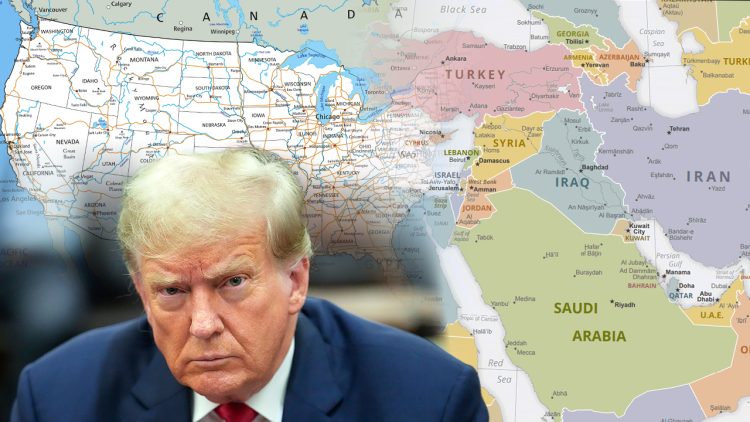
Donald Trump was sworn in on Monday as the 47th President of the United States, marking an unprecedented political comeback that has drawn sharp criticism and fresh concerns over his policy agenda. His first day in office was marked by bold actions, including the controversial pardoning of 1,500 supporters convicted for their involvement in the 6 January 2021 Capitol riots. This move, alongside sweeping domestic and foreign policy shifts, has heightened divisions in the US and raised questions about Washington’s approach to global alliances.
Trump’s pardons, which included prominent members of the far-right Oath Keepers and Proud Boys, left their convictions intact but freed them from prison sentences. The Capitol attack, which aimed to overturn Trump’s 2020 electoral defeat, resulted in the deaths of four people and injuries to 140 police officers. Critics were quick to condemn the pardons. “This undermines the rule of law and dishonours those who risked their lives to protect democracy,” said a senior Democratic official. Trump, however, defended his decision, stating, “We have a government that refuses to defend American borders but sacrifices its own people.”
Amid these controversies, Kurdish leaders in the Middle East released statements highlighting the importance of continued US-Kurdish cooperation. Bafel Jalal Talabani, President of the Patriotic Union of Kurdistan (PUK), underscored the historical ties between the two nations. “I extend my heartfelt congratulations to President Donald Trump on his inauguration. I look forward to working with his administration to strengthen our historical bonds and to promote peace and stability in the region,” he said, emphasising the shared commitment to regional security.
Mazloum Abdi, General Commander of the Syrian Democratic Forces (SDF), also stressed the need for collaboration. “We look forward to continuing cooperation in achieving stability, defeating terrorism, and supporting peace in Northeast Syria. Together, we can build a better future for our peoples,” he said. Similarly, Sinam Mohamad, the Syrian Democratic Council’s representative to the US, stated, “We sincerely look forward to partnering with President Trump and his team again for the benefit of our two countries.”
Trump’s first hours in office signalled a sharp departure from the policies of his predecessor, Joe Biden. Among his immediate actions was the declaration of a national emergency at the US-Mexico border, a move intended to allocate additional funding and deploy troops to the region. He also withdrew the United States from the Paris Climate Agreement for the second time, halting US participation in global efforts to combat climate change.
In immigration policy, Trump shut down a programme that allowed migrants to schedule legal entry appointments via smartphones, leaving thousands in limbo, including nearly 1,660 Afghan refugees cleared for resettlement. His orders to restrict federal diversity initiatives and to recognise only genders assigned at birth further polarised public opinion.
Trump’s rhetoric during his inauguration emphasised a return to an assertive America. “I was saved by God to make America great again,” he said, framing his presidency as a divinely guided mission. However, his actions and words have stoked fears of heightened divisions, with critics accusing him of prioritising political loyalty over governance.
Kurdish leaders, in their statements, avoided taking a stance on Trump’s domestic agenda, focusing instead on the strategic need to maintain and expand cooperation with Washington. The region’s stability, long influenced by US policy, remains a priority for leaders like Talabani and Abdi, who view partnership with the US as critical in addressing security challenges and advancing peace efforts.
As Trump’s administration begins to take shape, the path forward for US foreign policy and its alliances remains unclear. Whether the renewed focus on “America First” will affect partnerships like the one with Kurdish forces in Syria and Iraq is a question that will shape regional dynamics in the months to come.