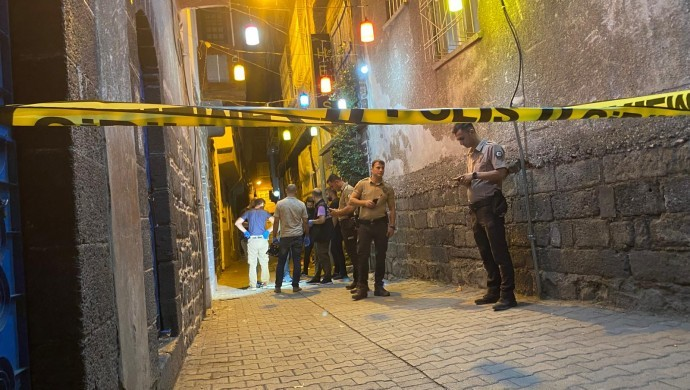
Three suspects were arrested yesterday after the detention following attacks on a café and a hotel in Turkey’s Kurdish-majority city of Diyarbakır’s (Amed) Sur district on the night of 11 July, Mezopotamya News Agency reported. Armed with firearms and sound bombs, the attackers targeted these secular-lifestyle establishments, raising concerns among MPs and locals of a return to the violent era of the 1990s.
CCTV footage from the vicinity enabled police to identify the assailants. After being questioned by the Diyarbakır Public Prosecutor’s Office, the three were remanded in custody.
The suspects claimed the establishments were causing disturbances with noise. However, Türkan Elçi, the café owner and a Republican People’s Party (CHP) deputy for Diyarbakır, suggested the attacks stemmed from hostility towards secular lifestyles. She noted that the café, which also serves as an art gallery, had received threats prior to the assault.
Elçi highlighted that the attacks are part of a troubling series of similar incidents in recent weeks. Civil society organisations in the city have echoed these concerns. Representatives held a press conference before the arrests to address the escalating violence. Yıldız Ok Orak, co-chair of the Diyarbakır branch of the Health and Social Services Workers’ Union (SES), cited an incident on 7 July in which businesses were threatened over their customers’ clothing.
Adalet Kaya, an MP for the pro-Kurdish Peoples’ Equality and Democracy (DEM) Party, pointed to radical Islamist group Hezbollah, known for its violent activities in Kurdish-majority cities during the 1990s, as a possible instigator. Kaya linked the recent violence to a broader campaign targeting secular lifestyles, invoking the group’s past atrocities, including the murder of Islamic feminist writer Konca Kuriş.
Kaya suggested state involvement in the attacks, supported by former interior minister Suleyman Soylu’s description of the ruling Justice and Development Party’s (AKP) alliance with the Free Cause Party (Hüda-Par) as a state project to promote conservatism in Kurdish-majority cities.
Abbas Şahin, co-chair of the DEM party in Diyarbakır, warned that these attacks aim to intimidate the public and alter the region’s demographic composition. He condemned the attacks on secular lifestyles as manipulative and lacking genuine public support.
The violence began in June with a group, chanting religious slogans, attacked dance school students in a park. In early July, businesses were targeted under the pretext of alleged support for Israel. The third attack arose from a dispute over women using a communal swimming pool, where attackers used sharp objects and threats, reminiscent of the 1990s violence.