Tevfik Kalkan, Yeni Yaşam, 31 March
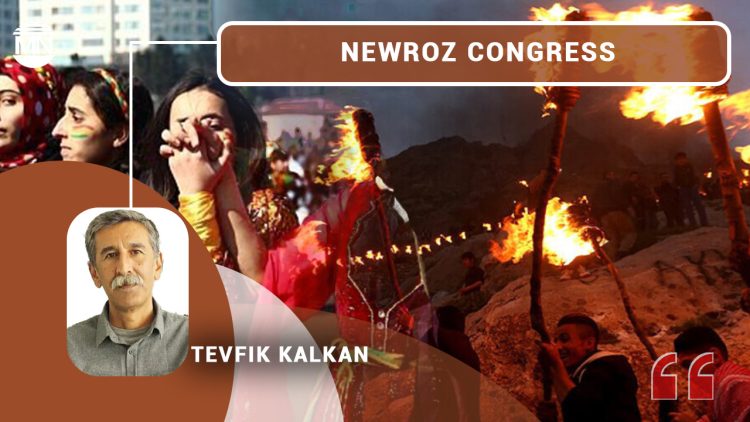
Everything unfolded right before the eyes of the entire world. Those who wanted to see and hear did just that. From Hakkari (Colemerg) to İstanbul, from Hewraman to Rome, from Sulaymaniyah (Silêmanî) to Raqqa (Reqa), Frankfurt and London, tens of millions celebrated Newroz in streets, neighbourhoods, vast squares, homes, on digital platforms, and in the countryside. The cries of these millions echoed across every continent. It was a true visual feast. With its most authentic rhythms and a dazzling array of movements, it brought together peoples, individuals, genders, children, and the elderly—inviting even more to join in—right before the world’s gaze.
The foothills of mountains, horses with amber manes, babies with sparkling eyes, roses, faces, restless feet, arms locked together, songs that never ceased—this intertwining of languages through writing, storytelling, and dialogue painted an immense picture. Has there ever been another folk event this colossal anywhere in the world, let alone one with such profound political meaning—a people’s congress? Has there ever been a declaration of freedom, a congress of liberty, so vast, so comprehensive, with such clearly defined political aims?
And Newroz is theatre, art and music all at once.
If theatre is the reflection of life, the reproduction and resonance of words and actions that give it meaning, then a grand play was performed on the world’s stage.
If art is the most aesthetic display of every figure rising up—provoking thought while stirring passion—then Newroz became a living masterpiece.
If music is what bursts from the heart, touching the subtlest, most hidden parts of the soul and turning them into a roaring river, then Newroz was music from start to finish.
If society is an organic entity embodying freedom, democratic life, and values—speaking its own words, making its own decisions, and taking action—then it did so as a grand congress, voicing itself, deciding, and acting everywhere.
Even hope has its anguished side
There are some historical actions steeped in sorrow, expressed in the mournful language of loss, seeking to fill the irreplaceable void left behind.
There are actions born from fierce struggle, where everything gained is lost alongside what’s taken, and people fight desperately to bring it back.
There are games drenched in torment. Blood flows from eyes instead of tears. The rhythm of footsteps falls like a shattered mountain trailing the other foot. Arms struggle to rise beside one another. Faces and tongues brim with grief. Even hope, in its anguished form, smiles only out of respect for honour.
Perhaps it’s a longing for a lost life, a search for hope that spills onto roads and mountains.
The fire has darkened, and the heart flapping its wings toward the sun is often alone.
Newroz is always a beginning
Yet Newroz is full of hope. Its exuberance, the way it expresses itself with such vitality, surely stems from this. An act is either defeated or exuberant depending on the strength of its connection to life. What struggle makes visible is victory alone. Perhaps that’s why every Newroz feels like a fresh start.
There are historical actions carried out in the vibrant language of struggle, each a tribute to what’s been achieved. This Newroz, the Kurds offered their gratitude to its creative activists.
There are marches meant to renew faith in the power that paves the way. Newroz showcased the might of being a traveller on that PATH.
There are revolutions that glare fiercely at the old, the outdated, the things left behind or needing to be discarded, unleashing the pent-up fury in a defiant, deep flow. Newroz is a light that never fades, never darkens, and cannot be dimmed.
This year’s Newroz
One: The existence of tens of millions was powerfully displayed. That power was the resolute hope shaped by a resounding call by the Kurdish People’s Leadership for freedom and democracy. This is a Congress decision. It demonstrated with exuberance that no ruler or coloniser has the strength to crush this power.
Two: It’s the undeniable decision for the renewed and democratised unity of all sections of the nation—its classes, faiths, cultures, and localities. The Congress has become national, societal.
Three: Amid a region ravaged by war, it’s a decision for democratic alliances open to all, paving the way for universal solidarity and organising the self-defence of peace. The Newroz Congress has flung every door wide open.
Four: It’s a call to lead the resolution of worsening societal problems. It insists on creating democratic institutions and governance. With a cry for renewal, it has proclaimed urgent tasks that cannot be delayed.
From a lone congress to tens of millions
Newroz is a reckoning. It’s the public airing of what’s been done and left undone. While deciding on resistance and struggle against oppression, it takes stock of itself. It does so with a tradition few peoples can claim. What else could explain dancing to such rhythms almost everywhere? The decision made at Newroz is fundamental. This was done at the 1973 Newroz too. From a single-person congress, it has grown into a congress of tens of millions. The call to “Malazgirt” has been answered. Now it’s up to those who must respect and fulfil the decisions of this Newroz Congress.