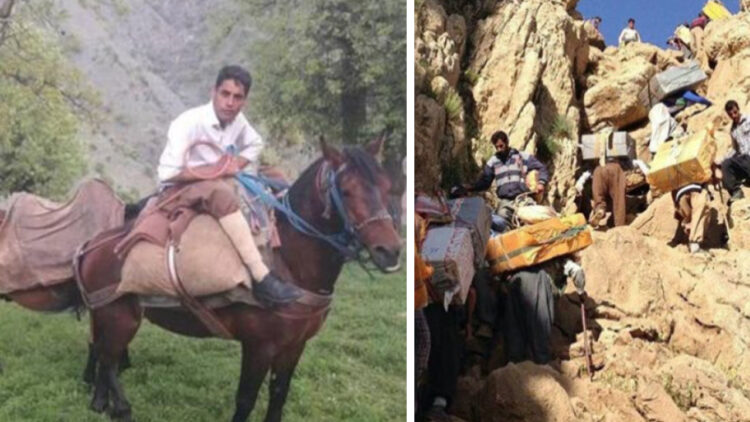
A kolbar, a Kurdish cross-border trader, was killed by Iranian border guards in Rojhilat (Iranian Kurdistan) on Friday, Roj News reported.
Rahim Ibrahim lost his life after border guards opened fire on him and other kolbars. Afterwards, the border guards reportedly threw Ibrahim’s body into the river.
After 24 hours, his body was found and pulled out of the water by locals of Wiliu village in Sardasht, West Azerbaijan province of Iran, where Ibrahim was from.
Kolbars are porters who transport goods on their backs across long distances along Iran’s borders, primarily in the impoverished, mountainous Kurdish regions near Iraq.
Ibrahim, a father of three, is one of several kolbars who have been targeted by border guards this year. In early May, two kolbars were killed within a week of each other in separate incidents.
According to Roj News, at least 37 Kurdish kolbars and businessmen have lost their lives on the borders of Eastern Kurdistan (Rojhilat) this year or have been killed by Iranian forces.
In a two-week period in November last year, 43 kolbars were killed or injured, as revealed by a report from Hengaw.
The Kurdistan National Congress (KNK) released a statement condemning the targeting of kolbars by Iranian border guards.
“In the past two months, the attacks by the occupying forces of the Islamic Republic of Iran on the Kurdish kolbars, on the artificial borders of the east and south of Kurdistan, have increased and as a result there have been several deaths and injuries and dozens of families have also been affected,” the KNK said.
They continued, adding, “Contrary to its many promises to solve the kolbar problem, the Iranian government has increased violence against the kolbars over the past two years. There is no excuse for these attacks and killings. This attack and these killings are the hostile policy of the Islamic Republic of Iran against the people of Kurdistan.”
“We, as the KNK, condemn these brutal attacks and request the Iranian government to fulfil its duty and responsibility to protect the lives of the people. On this occasion, we once again wish mercy to the victims, condolences to their families, and healing to the injured,” the KNK concluded.