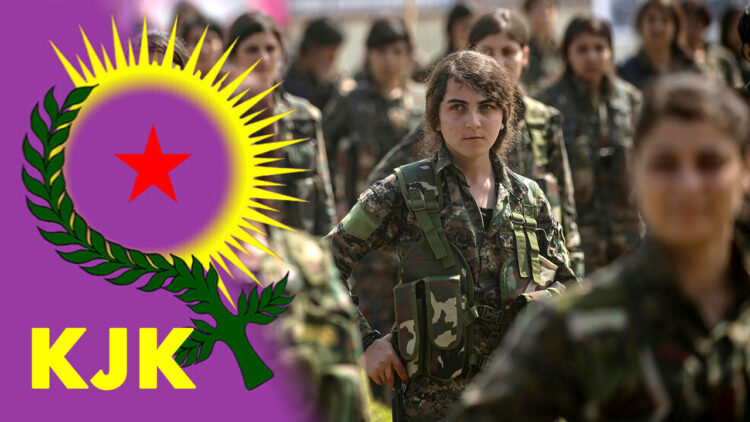
On the occasion of the International Day for the Elimination of Violence against Women on 25 November, the umbrella organisation Kurdistan Women’s Communities (KJK) has issued a powerful statement calling on women worldwide to strengthen their collective struggle against systemic violence. Under the slogan ‘Jin, Jiyan, Azadî’ (Woman, Life, Freedom), KJK has called for global solidarity and transformative action to dismantle patriarchal systems and confront systemic injustice.
The KJK honoured the enduring legacy of women who have given their lives in the struggle for freedom, commemorating figures such as the Mirabal sisters of the Dominican Republic and Kurdish activists Sakine Cansız, Şilan Kobanê and Evîn Goyî. “We vow to carry their legacy into times of freedom,” the statement said, pledging to continue their struggle against oppression.
The statement underlined the universal and interconnected nature of gender-based violence, describing it as deeply rooted in patriarchal ideologies and exacerbated by political instability, war and socio-economic crises. The KJK stressed that violence against women is not limited to individual acts but is part of a broader system that affects not only women but also children, nature and society as a whole. “Violence against women originates from the hegemonic male mindset and system, and has both universal and local characteristics,” the statement said. “This destruction, which begins with women, extends to nature, children and the whole of society in an interconnected way.”
The KJK drew attention to the global scale of the crisis, highlighting the disproportionate impact of war and displacement on women in conflict zones such as Palestine, Lebanon and Afghanistan. They also condemned Iran’s human rights abuses, including the execution of women and called for international solidarity to expose and resist these injustices.
The statement also addressed the less visible but equally pervasive forms of violence against women in Western societies. The KJK criticised the commodification of women’s bodies under capitalist modernity, where consumerist ideals of beauty and fashion mask systemic exploitation. “It is essential to uncover and expose the hidden violence that turns women into commodities and enforces fragmented perceptions of their own bodies,” the KJK stated. They noted that structural violence is often normalised in these contexts, contributing to a global culture of gender inequality.
Calling for an integrated and organised response, the KJK stressed the importance of grassroots mobilisation, self-defence strategies and solidarity across borders. “As women’s movements, we need to promote self-defence-based peace and resolution strategies against these war strategies on a global scale. This has become a vital necessity,” the statement urged. Stressing the need for unity, they encouraged women of all nations, religions and identities to work together. “It doesn’t matter what nation, religion, or colour we come from. We must unite our struggles under the philosophy of democratic modernity, recognising our differences as strengths.”