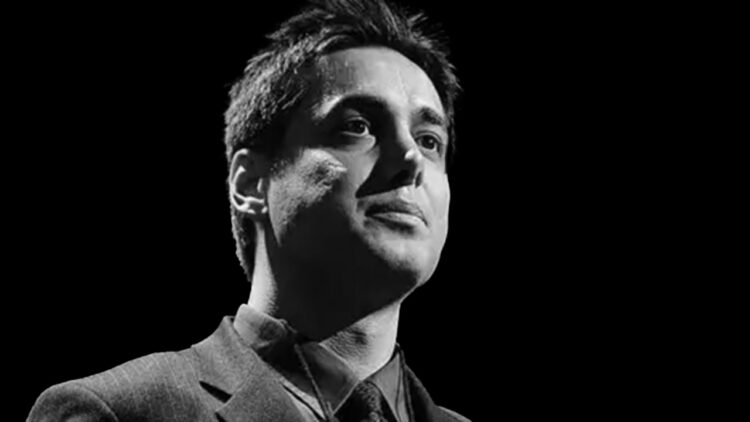
On the evening of 13 November, Kianoosh Sanjari, a former Voice of America (VOA) employee and human rights advocate, passed away in Tehran, Iran.
Sanjari’s death occurred shortly after he published a post on social media platform X, in which he declared that if four political prisoners were not released from the Islamic Republic’s prisons by 19:00 on that day, he would take his own life. The circumstances surrounding his death—whether it was a suicide or an execution carried out by agents of the Islamic regime—have overshadowed other significant developments within the country, seizing the attention of both the public and the media.
“No one should be jailed for expressing their opinions, but I will end my life in protest against Khamenei’s dictatorship and his partners. Perhaps this will serve as a wake-up call [for others],” Sanjari wrote on his X account.
Rokna News Agency reported that a psychiatrist, present at the scene of the tragic event, stated that Sanjari had expressed no suicidal thoughts during a psychotherapy session on the evening of Wednesday 13 November. However, shortly thereafter, he took his own life.
The circumstances surrounding his apparent suicide are highly questionable. The location of his death, near Hafez Bridge and the Charsoo building, raises significant doubts. The roof of Charsoo Tower is inaccessible, and there were no visible signs of blood following his fall, prompting widespread speculation on social media that his death may have been a targeted execution by the regime’s security agents, meticulously staged to resemble a suicide.
In response, a website linked to conservative circles cited Judge Mohammad Shahriari, the acting head of Tehran’s Criminal Affairs Prosecutor’s Office, who attributed Sanjari’s death to suicide caused by alleged mental illness.
Forough Kanaani, an Iranian social science researcher based in the United States, responded critically to this official narrative, and particularly to the notion of suicide as an appropriate form of protest. She emphasised that the core slogan of the Iranian revolution—’Women, Life, Freedom’—intrinsically values life and underscores the importance of living to attain freedom. Kanaani further stressed that the Iranian regime and its officials bear full responsibility for the current dire state of affairs in the country suggesting that, if voices like Sanjari’s go unheard, it is because the Iranian people have been subjected to a tragedy, where survival has become their sole aspiration.
Ahmad Batebi, an Iranian political activist in exile, pointed out that the Islamic Republic of Iran’s systemic cruelty and repression of dissent compels its critics to resort to hunger strikes, self-immolation, and suicide as their only means of making their voices heard on the global stage.
Forced to flee Iran in 2006 due to intense security pressure, Sanjari initially sought refuge in Iraqi Kurdistan with the support of Kurdish parties, particularly Komala. Later, with the assistance of Amnesty International, he relocated to Norway, before finally settling in the United States, where he continued his media and human rights work with the Broumand Foundation and the Iranian Human Rights Organisation.
However, in October 2016, Sanjari returned to Tehran due to personal circumstances, including his mother’s ill health. His return led to his arrest by Iranian security forces, his subsequent torture at Amin Abad Hospital in Tehran, and a draconian 11-year prison sentence.