

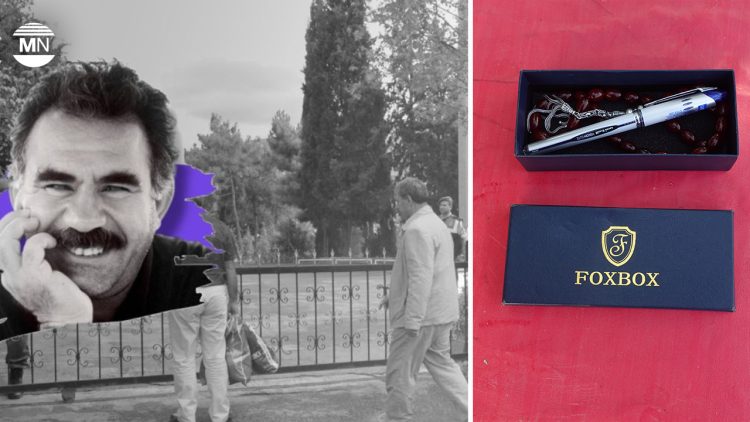
Jailed Kurdish leader Abdullah Öcalan has met two young relatives for the first time in over two decades, during an Eid al-Adha visit to İmralı prison island on 7 and 8 June. The 77-year old, who has been held under strict isolation for the majority of his 26 years behind bars in Turkey, offered gifts of pens to the children and shared what one family member described as a message of “building a new life”.
The family visit took place under the Eid holiday visitation rights applied across the country’s penal system. Among the attendees were nephew Ömer Öcalan, who is an MP for the pro-Kurdish Peoples’ Equality and Democracy (DEM) Party and a member of the İmralı delegation, Ali Öcalan, and the two children Ronahi Arjin (10) and Dilan Arin (11) as first time visitors. Abdullah Öcalan’s sister Fatma was unable to attend due to illness and mobility issues.
Speaking to Mezopotamya Agency on Monday, Ali described the moment as “a mixture of joy, sadness and anticipation”. He said Abdullah Öcalan embraced the children, asked about their schooling, and presented them with pens, saying “read and study”. “‘What do you want to be when you grow up?’ he asked Ronahi. She said, ‘I want to be a lawyer’,” Ali Öcalan recounted.
Öcalan, who recently ushered in the historic disarmament of the Kurdistan Workers’ Party (PKK), appeared healthy and determined, according to his nephew. “‘We are building a new life here,’ he said. He was energetic and full of hope,” Ali added. In Kurdish, jiyan (life) and nûjiyan (new life) symbolise not just survival, but the hope for freedom, dignity and rebirth central to the Kurdish struggle.
With the meeting holding symbolic weight within Kurdish political circles, Ömer Öcalan had earlier stated that the visit reaffirmed hopes for a future of “peace and democratic transformation”, referencing long-standing debates over Kurdish-Turkish reconciliation and minority rights in Turkey.
The visit comes amid growing public attention on the conditions of Öcalan’s detention, with international pressure for Turkish authorities to grant prisoners with life sentences the ‘right to hope’. Observers have frequently criticised the arbitrary and prolonged restrictions on family and legal access to İmralı, which remains one of Turkey’s most tightly controlled prisons.
The seven prisoners held on the island – Öcalan and six others – received family visits over the weekend. Three of the inmates have been only recently transferred to İmralı.
Located in the Sea of Marmara, İmralı F-Type High Security Prison houses only a handful of inmates under strict conditions. Lawyer and family access have routinely been denied or delayed alongside total communication bans, prompting calls from domestic and international human rights advocates for greater transparency and adherence to legal standards.


