

Renowned human rights lawyer and long-standing advocate for freedom and justice Eren Keskin reflects on the enduring struggle of Kurdish women in her article ‘Kadın, Yas, Direniş’ (Woman, Grief, Resistance), originally published in JIN Dergi on 1 June 2025. From personal accounts of war and state repression to the relentless calls for peace of mothers who have lost their children, Keskin sheds light on the profound emotional and political labour endured by Kurdish women. Recounting memories of figures such as the aunt Berfo and Gurbetelli Ersöz, Keskin weaves a compelling narrative of resistance rooted in grief, calling for recognition, justice, and above all, peace.
The original article has been translated by Medya News.
Eren Keskin
I have been involved in the struggle for human rights since the 1990s. Together with my friends, I have witnessed so much suffering caused by war that people would hardly believe it if I told them. Despite the immense pain and deep mourning, we always felt deep respect for the unwavering resistance. Women played a crucial role in this resistance, and there were some I could never forget.
I have never forgotten the mother who was detained for hanging a photograph of her son, a guerrilla fighter, on her wall. She was tortured while in detention and imprisoned for allegedly aiding and abetting. She cried constantly in prison. But her complaint was never about the torture. What she could not comprehend was why displaying her child’s photograph was forbidden. That mother never took the photograph down from her wall. Yet she died without ever being reunited with her son.
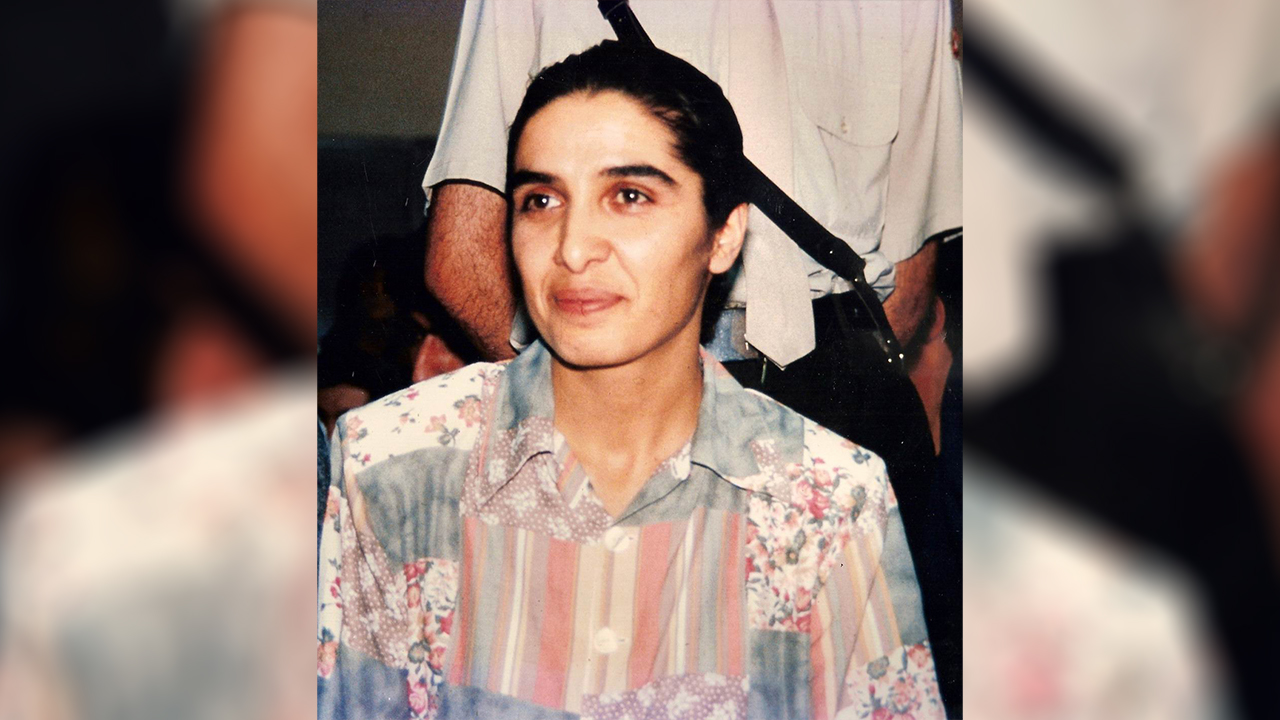
One woman I could never forget, and perhaps no one else who has struggled for a resolution to the Kurdish issue in this region could either, was Gurbetelli Ersöz. Gurbetelli was a journalist. She was the editor-in-chief of Özgür Gündem, the first woman ever to hold this position in our region. She was multicultural, kind-hearted and deeply conscientious, with immense integrity and strength of character. She was wholeheartedly committed to the Kurdish issue, ultimately giving her life for its resolution. What pained her most was her younger brother. He was studying at university to become a doctor, and her greatest dream was to see him practising as one. However, she discovered that he had decided to join the resistance in the mountains. One day, she turned to me and said, “Could you talk to my brother? We need doctors too. Can you persuade him to continue his studies and not leave university?” I spoke to her brother, and he replied, “Sister, don’t bother. I’ve made my decision.’ Shortly afterwards, Gurbetelli’s younger brother, who was studying at medical school, was killed alongside his friends on the road before they reached their desired destination. Her greatest sorrow was for her brother. Eventually, she followed him. I have never forgotten Gurbetelli. As a woman, I remember her upright stance, her calm demeanour in every situation, her resilient smile — even in prison — her devotion to her brother, her deep mourning and her strength of resistance.
‘Kurdish Female Journalists Day’ celebrated as inspirational Gurbetelli Ersöz is remembered
In this war-torn environment, I have met many women and never once witnessed any of them harbouring a desire for revenge. Despite having experienced numerous violations, none of the women I spoke with ever said that they wanted war. The phrase we always heard from Kurdish mothers and women was ‘We want peace’. Peace was always their desire. Their sole hope and the greatest reason for enduring their grief was to achieve peace one day.
I felt even more strongly about these women’s sentiments during the Şırnak massacre, when I met the women of the village of Şah, which is located between Şırnak and Cizre. It was 1993 and Şırnak had recently been attacked by state forces, leading to widespread upheaval. We travelled to the region as a delegation and stayed at the Kadıoğlu Hotel in Cizre. A village headman came to our hotel and said, ‘Our village is being burned. Please help.’ We set out together, but soldiers blocked our path, saying that the roads were mined and that we could not pass. A white Renault driven by a young man and filled with women and children approached from the opposite direction. There were so many of them that we could not count them all, but I will never forget the elderly woman who showed us her burnt hands through the window. Then they let us through. We reached the village of Şah, lying between Şırnak and Cizre. A bedridden woman named Bende Özdemir, aged around 60, had suffocated from smoke during the blaze because she was unable to get up. In the garden, water was boiling in a large pot for washing the deceased. Bende Özdemir had been laid on the ground and two women were holding her head upright. When we asked why, the answer they gave us has stayed with me forever: ‘We no longer bow the heads of even our dead.’ This sentence deeply affected all of us. Here was a way of expressing grief intertwined with resistance: we won’t even let our dead bow their heads.
We have witnessed many similar incidents, and during this period of conflict, we realised that women offered the most persistent and effective resistance. This is because women sent their most precious beings into this environment of conflict and war. They endured loss and grief, and yet they remained in resistance. Their only aim was to resolve the situation peacefully and eventually be reunited with their loved ones.
Some of these grieving women came into our lives as the Saturday Mothers and the Peace Mothers. Both consisted of mothers who had endured the greatest pain during the conflict. They had lost their children, spouses and other loved ones, either through enforced disappearances or in the course of the war. Their struggle was of such significance that this act of civil disobedience influenced peace movements worldwide.
Saturday Mothers’ 30-year quest for justice is spotlighted at İstanbul panel
One of these mothers was Berfo, who was well known to the public. Her son Cemil, Cemil Kırbayır, a young Kurd, had a socialist worldview. Following the military coup on 12 September, Cemil was detained in Kars and, after that, no further news was heard of him. For years, the family sought information about Cemil’s whereabouts. Many witnesses and friends of Cemil came forward to testify that he had been tortured and killed. Yet the state did not respond. The years passed, and Berfo turned 100. From the day Cemil left home until she turned 100, she never closed her door, always left it open with the hope that Cemil would return one day. Berfo waited for Cemil until she died. Once, she had some hope because the highest state authority had made her a promise. In 2011, the then prime minister, Tayyip Erdoğan, met with families of the disappeared and said: ‘Under our rule, no one will disappear in detention, and the fate of all those who disappeared will be revealed,’ making a special promise to Berfo. He vowed to find out what had happened to her son and who was responsible. Indeed, a commission was established in parliament under Erdoğan’s instruction. The commission was set up to investigate Cemil Kırbayır’s disappearance. As the family’s lawyers, we accompanied them and gave statements. All surviving military, police and intelligence (MİT) personnel from that period were questioned, and ultimately the state published an official report. The commission concluded in the report that Cemil Kırbayır had been tortured and killed after his detention and that his body had been concealed. This was the state’s own report, which was effectively a confession applicable to all families of the disappeared. But what happened? The political stance of those in power shifted and alliances changed. Following a compromise with the deep state, all promises were forgotten, leaving Berfo alone with her profound grief. She passed away still waiting for Cemil. Indeed, Berfo’s grief perhaps symbolised that of all the mothers in the region.
HRA and the Saturday Mothers: ‘Cemil Kırbayır’s murder case must not be closed’
So much pain has been endured by both sides, as conflicts inevitably cause suffering for everyone involved. However, while one side could make itself heard by everyone, the other’s voice was largely ignored or unheard, except by human rights defenders, certain institutions, and a limited number of individuals. These double standards lie at the heart of all the issues we have faced.
We are now entering a new process. An opportunity has arisen to heal this pain and grief to some extent, and I am certain that women desire this hope the most. All those courageous women who have both felt and evoked grief alongside resistance. So, if a genuine peace process occurs, it will make women the happiest.
Related Article:


